2026 Best Tapered Roller Bearing Manufacturers for Buyers

Time:2026-11-15 Author:Mason
0%

Tapered Roller Bearing selection is a precision decision, not a catalogue exercise. A small workshop bearing may look much like a heavy-duty unit, yet load ratings, steel quality, heat treatment, and raceway finish can change service life. Grand View Research valued the global bearing market at USD 132.7 billion in 2023 and projected an 8.3% compound annual growth rate from 2024 to 2030. This figure covers bearings broadly, not tapered roller bearings alone. It signals a large, competitive supply landscape—not a guarantee of quality.

Henry Timken, the bearing-industry pioneer, is often credited with saying, “The greatest thing in this world is not so much where we stand as in what direction we are moving.” For buyers, that direction means checking evidence: published load ratings, traceable manufacturing information, dimensional consistency, and application support. Ask how a manufacturer controls heat treatment and inspects raceways. Request documentation for the exact series and operating conditions. A polished brochure is not enough.

This guide compares leading Tapered Roller Bearing manufacturers through practical buyer criteria, including product range, customization, quality systems, delivery capability, and after-sales support. It also considers where each supplier may fit best, from automotive hubs to industrial gearboxes. Rankings can simplify a shortlist, but they cannot replace engineering review. Real operating conditions matter: speed, shock loads, lubrication, alignment, and contamination all shape performance. One limitation remains: public company claims can be difficult to compare directly. Buyers should verify critical details before placing an order.
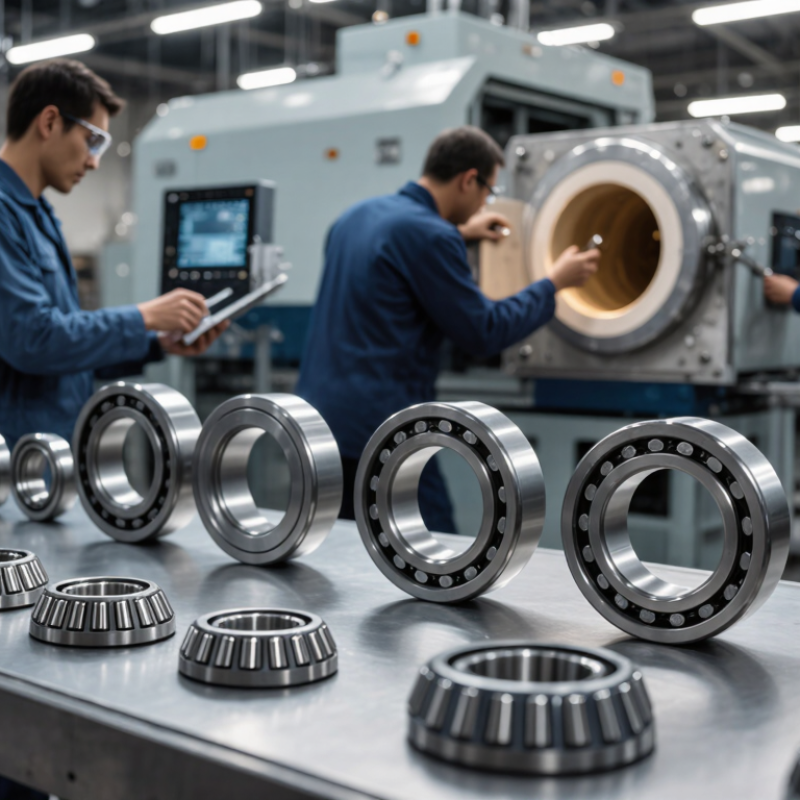
2026 Best Tapered Roller Bearing Manufacturers for Buyers

Tapered Roller Bearing Basics: Geometry, Contact Angles, and ISO 355 Dimensions

Tapered roller bearings use conical rollers between matching inner and outer raceways. Their projected raceway and roller axes meet near a shared apex, helping the rollers roll with limited sliding. The contact angle sets the balance between radial and axial load support: a steeper angle generally improves axial capacity, but changes the bearing’s equivalent-load calculation. Small angle, big consequence.

ISO 355:2019 defines metric tapered roller bearing boundary dimensions and series designations. Buyers should compare bore, outside diameter, and total width against the specified series, not assume that similar-looking bearings are interchangeable. A caliper can confirm the basic envelope, but it cannot verify internal geometry or fit. In practice, shaft alignment and mounting adjustment matter too; even a correct size can run hot if clearance is wrong.

For life estimates, ISO 281:2007 gives the basic rating-life relationship, L10 = (C/P)^p, with p = 10/3 for roller bearings. L10 is expressed in millions of revolutions and represents a statistical rating, not a service-life promise. The calculation depends on dynamic load rating C and equivalent dynamic load P, so a supplier’s documented values matter. Real operating conditions still complicate the estimate. Dust, lubricant condition, and misalignment can shorten life, and a clean calculation may hide those details.

Bearing Performance: ISO 281 L10 Life and Its 90% Reliability Basis

2026 Best Tapered Roller Bearing Manufacturers for Buyers

ISO 281:2007 defines basic rating life, L10, using a 90% reliability basis. For tapered roller bearings, the formula is L10 = (C/P)^(10/3), measured in millions of revolutions. Here, C is the basic dynamic load rating, and P is the equivalent dynamic bearing load. The exponent reflects the fatigue-life relationship specified for roller bearings. It gives buyers a consistent way to compare load and life data across technical catalogs.

That 90% figure is a population estimate, not a guarantee for an individual bearing. Under the standard’s assumptions, 90% of a sufficiently large group is expected to reach or exceed the calculated life before fatigue damage develops. Real operating conditions can shift results. Misalignment, lubricant contamination, temperature, and shock loads matter. A dusty conveyor housing or uneven shoulder contact can shorten service life, even when the catalog calculation looks sound. ISO 281 also provides reliability adjustment methods beyond the basic L10 calculation.

Tips: Check that C and P use matching units. Confirm the actual speed, load spectrum, and lubrication conditions before comparing suppliers. L10 is useful, but it is not the whole story. A careful buyer should ask which assumptions support the quoted life.

2026 Manufacturer Landscape: Timken, SKF, NTN, NSK, and Schaeffler

In 2026, buyers comparing tapered roller bearing manufacturers should look beyond catalog size. Five major global suppliers may offer broad product ranges, but their strengths can differ in engineering support, regional stock, and customization. A bearing for a slow, heavily loaded conveyor may need a different design choice from one used in a fast vehicle axle. Fit matters. So does service.

Compare load ratings, speed limits, internal clearance, and available dimensions against the equipment drawing. Ask for material and inspection documentation, along with clear traceability for each shipment. Check whether the supplier can support installation questions and explain replacement intervals. A low unit price can lose its appeal if a critical size has a long lead time. Stock availability changes. Verify it.

Large manufacturers often have extensive catalogs and international distribution, while other suppliers may offer closer local support or more flexible order quantities. These are tendencies, not guarantees; assess the specific plant and sales channel. A spreadsheet rarely captures response quality, and that is an imperfect measure, but response time during a technical inquiry can reveal practical differences. Request comparable quotations using the same operating conditions, tolerances, and delivery terms before choosing.

Buyer Comparison: Dynamic Load Ratings, Tolerances, Materials, and Lead Times

When comparing tapered roller bearing manufacturers, begin with the load case, not a headline rating. Dynamic load ratings help estimate fatigue life, but only when speed, lubrication, alignment, and operating hours match real conditions. A bearing in a dusty conveyor may face different risks than one inside a clean gearbox. Small details matter. Ask suppliers to state the rating standard and provide dimensional inspection records for the exact series.

Tolerance classes affect running accuracy, heat, and noise. Check bore, outside diameter, width, and radial runout; a catalog label alone is not enough. For matched bearing pairs, confirm preload or clearance control and how parts are measured after heat treatment. Material claims deserve similar scrutiny. Request steel grade, hardness range, cleanliness data, and evidence of process control, rather than relying on words like “premium.”

Lead times should be compared by configuration, not by a broad promise. Ask whether quoted stock is finished, inspected, and ready to ship, and whether cages or seals alter availability. A practical quote includes minimum order quantities, packaging, traceability, and a realistic delivery window. Even then, forecasts can slip. I would leave room for a trial order: check noise, temperature, and fit in the actual housing before scaling up.

Selection Workflow: Match Bearing Capacity and Speed to Operating Conditions

A reliable bearing selection starts with the machine, not a catalog ranking. Record radial and axial loads, shaft speed, duty cycle, and the highest expected temperature. Note whether the load changes during startup or reverses under braking. Measure before choosing. A conveyor running steadily differs from a gearbox facing frequent shock loads.

Compare the calculated loads with each bearing’s dynamic and static ratings, using the application’s actual operating conditions. Then check the speed limit, lubrication method, and required service life. Tapered roller bearings can carry combined loads, but a heavier load rating alone does not guarantee longer life. Excessive preload can raise friction and temperature, especially at higher speeds. Confirm the selected arrangement and adjustment method against technical documentation.

Allow for real-world details. A housing may run hotter than the ambient air, and imperfect alignment can shorten service life. Keep a record of lubricant type, shaft fit, and measured operating temperature. If calculations depend on uncertain load data, treat the result as provisional. A monitored trial can reveal rising heat, unusual vibration, or early wear before the design is repeated across multiple machines.

FAQS

How do tapered roller bearings support loads?

Conical rollers run between matching inner and outer raceways. Their geometry supports both radial and axial loads.

Why does the contact angle matter?

A steeper angle generally improves axial-load capacity. It also changes the equivalent-load calculation. Small angle, big consequence.

What dimensions should I check against ISO 355:2019?

Compare the bore, outside diameter, and total width with the specified series. Similar-looking bearings may not be interchangeable.

Can a caliper confirm that a bearing will fit?

It can check the basic envelope, but not internal geometry or fit. Shaft alignment and mounting adjustment matter too. I would still check the equipment drawing.

What does the L10 life estimate tell me?

ISO 281:2007 uses L10 = (C/P)^p, with p = 10/3 for roller bearings. L10 is measured in millions of revolutions. It is a statistical rating, not a service-life promise.

What can shorten bearing life in actual operation?

Dust, poor lubricant condition, and misalignment can reduce life. A clean calculation may miss these details. Real conditions get messy.

What should I compare when evaluating suppliers?

Check load ratings, speed limits, internal clearance, and available dimensions against the equipment drawing. Ask for material, inspection, and shipment-traceability documents.

How can I judge supplier support and availability?

Ask about installation help, replacement intervals, and lead times for critical sizes. Compare quotations using the same operating conditions and delivery terms. Response time can offer a useful clue, though it is imperfect.

Conclusion

This guide explains how a Tapered Roller Bearing works, focusing on its tapered raceways, rolling elements, contact angles, and the ISO 355 dimensions used to describe standard sizes. It also introduces ISO 281 bearing-life calculations, clarifying that the L10 rating represents the operating life that 90% of a sufficiently large group of identical bearings are expected to reach or exceed under stated conditions. These fundamentals help buyers interpret specifications and compare products on a consistent basis.

The article outlines key factors for evaluating manufacturers and bearing options in 2026, including dynamic load ratings, dimensional tolerances, materials, and expected lead times. It then presents a practical selection workflow: define the load, speed, operating environment, and required service life; compare suitable capacity and precision levels; and confirm that the chosen bearing fits the assembly and maintenance plan. This structured approach supports informed purchasing decisions without relying on a single specification in isolation.


Mason

Mason

Mason is a seasoned marketing professional with a deep expertise in the company's offerings and a passion for driving brand awareness. With a strong background in digital marketing strategies, he has an innate ability to connect with diverse audiences and effectively communicate product benefits.......