Wheel hub bearing assembly selection is becoming more technical as vehicles carry higher loads, tighter tolerances, and smarter safety systems. Global buyers now compare sealing design, sensor integration, preload control, noise performance, and service life—not only unit price. Fortune Business Insights reported continued growth in the global automotive bearing market, supported by rising vehicle production and demand for reliable chassis components. Grand View Research also identifies advanced automotive bearings as a key area for efficiency and durability improvements.
A Wheel Hub Bearing Assembly combines the bearing, hub, flange, seals, and sometimes an ABS encoder. That compact structure sits behind the wheel, facing water, dust, heat, and road shock. Tedric A. Harris, a widely cited rolling-bearing specialist, described the bearing’s purpose as allowing relative motion “with a minimum of friction.” The statement sounds simple. Engineering it well is not.
This guide examines the 2026 assembly types most relevant to international buyers, including first-generation cartridge units, integrated hub modules, tapered roller designs, and sensor-ready systems. It considers load capacity, installation accuracy, corrosion resistance, supplier consistency, and total operating cost. Independent testing still matters. Catalog claims can look impressive, yet field results may differ. No classification is perfect, especially across passenger cars, commercial vehicles, and electric platforms. Buyers should verify fitment data, dimensional drawings, warranty terms, and test documentation before committing to volume orders. Small details matter here, sometimes more than expected.
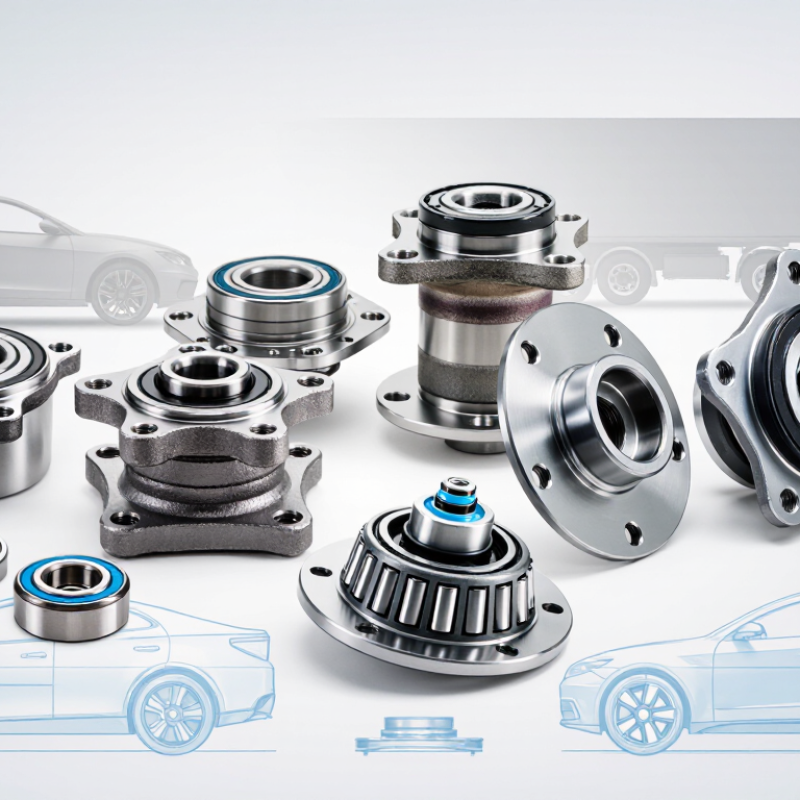
A wheel hub bearing assembly connects the wheel to the vehicle and allows it to rotate with controlled friction. Many modern units combine a mounting hub, bearing races, rolling elements, and protective seals. The hub flange provides the wheel’s bolting surface. Inside, steel balls or rollers move between hardened raceways while carrying vehicle loads.
Loads are not only vertical. Cornering and braking also place side forces on the bearing, so fit and correct clamping matter. Some assemblies include an encoder ring for the anti-lock braking system. A nearby sensor reads its rotating signal. Designs vary, though, and not every assembly uses the same layout or service method.
Seals help keep water and grit away from the rolling surfaces and retain lubricant. They are small, but damage can shorten bearing life. During inspection, a technician may check for rough rotation, unusual play, or a growling sound that changes with vehicle speed. These signs are useful, not conclusive. A clean-looking part can still be worn, and noise can travel through the suspension. Check vehicle-specific service information before choosing a replacement or tightening fasteners; torque requirements and sensor arrangements can differ.
Wheel hub bearing assemblies mainly fall into three generations. Generation 1 uses a separate bearing, hub, and seal. It suits basic applications but needs accurate press-fit control. Generation 2 adds a mounting flange to the bearing. This reduces installation time and improves positioning. Generation 3 integrates the hub flange, bearing, and ABS sensor system. It offers better signal stability and fewer assembly steps. Fitment still matters.
Tapered-roller assemblies support higher radial and axial loads, especially in commercial vehicles. Double-row ball assemblies usually provide lower friction and compact packaging. Driven hub assemblies include splines for powered wheels. They need stronger seals and careful torque control. According to Grand View Research, the global automotive wheel hub bearing market exceeded USD 7 billion in 2023. Its report also indicates growth near 7% annually through 2030. This supports continued demand for integrated designs.
Electric vehicles add another selection concern. Higher vehicle mass can increase bearing loads and noise sensitivity. A 2024 International Energy Agency report recorded electric car sales above 17 million worldwide in 2024. That expansion may accelerate demand for low-friction, sensor-ready assemblies. Buyers should check flange runout, preload, connector sealing, and corrosion protection. These details are easy to overlook. I would also question universal “plug-and-play” claims. Small dimensional differences can create vibration, sensor faults, or uneven wear.
Comparing wheel hub bearing assemblies starts with the load path, not the catalogue photograph. Single-row ball bearings suit compact hubs and moderate loads. Double-row angular-contact designs manage combined radial and axial forces more effectively. Tapered roller bearings tolerate heavier loads, but they usually create more friction and require precise adjustment. Integrated sensor versions add speed feedback for braking control. More parts also mean more failure points.
Material selection deserves equal attention. Through-hardened bearing steel offers strong rolling-contact fatigue resistance. Stainless steel helps resist moisture, but it may sacrifice load capacity. Seals should match road salt, mud, and temperature exposure. ISO 281:2007 defines basic rating life as the operating life reached by 90% of identical bearings under stated conditions. That L10 figure is useful, but it is not a guarantee for every vehicle.
Industry forecasts still show strong demand for automotive wheel bearings as vehicle production and electronic braking systems expand. A 2024 automotive bearing market report from IMARC identifies passenger vehicles as the largest application segment. Meanwhile, the U.S. Department of Energy’s 2023 vehicle-efficiency review keeps friction reduction among major efficiency priorities. Buyers should compare dynamic load ratings, seal torque, grease temperature range, sensor accuracy, and corrosion testing. Ask for test conditions. A high rating without temperature or contamination data can mislead. In field inspections, uneven tire wear, humming noise, and hub play often reveal problems earlier than laboratory numbers. Lab data matters. Real roads remain less predictable.
2026 Top Wheel Hub Bearing Assembly Types for Global Buyers
Key Selection Criteria for Global Automotive Buyers
Global buyers commonly choose bolt-on hub assemblies, press-fit units, and integrated sensor assemblies. Each type suits different vehicle platforms, service methods, and production targets. Bolt-on designs simplify replacement because the bearing and hub arrive as one tested unit. Press-fit assemblies can reduce package size, but installation requires accurate tools and controlled force. Integrated sensor versions support wheel-speed monitoring, although connector quality deserves close inspection.
Start with vehicle fitment, bearing load, and dimensional accuracy. Check flange diameter, stud pattern, axle interface, and encoder compatibility. A small mismatch can create noise, vibration, or uneven tire wear. Sealing performance also matters in coastal, snowy, and dusty regions. Look for verified resistance against water, salt, and fine road grit. Temperature ratings should match the vehicle’s brake and operating conditions.
From practical sourcing experience, documentation often separates dependable suppliers from uncertain ones. Request material records, inspection reports, batch traceability, and endurance-test data. Ask how preload is controlled during assembly. It is easy to overlook. Compare warranty terms, packaging strength, replacement availability, and production consistency across multiple batches. A low price can mislead. I have seen visually similar assemblies perform very differently after winter exposure. Buyers should also review installation instructions and torque requirements. One imperfect assumption remains: laboratory results may not represent every road environment. Field feedback still matters, especially when selecting parts for mixed climates and varied vehicle ages.
| Assembly Type | Typical Construction | Common Applications | Key Selection Criteria | Buyer Considerations |
|---|---|---|---|---|
| Generation 1 (Gen 1) | A sealed, pre-adjusted bearing unit, commonly using a double-row ball or tapered-roller bearing. The bearing is supplied as a unit rather than as separate serviceable components. | Passenger-car and light-vehicle wheel positions where the vehicle design uses a bearing pressed into a knuckle or housing. | Exact dimensions, bearing type, load rating, sealing, fit, and compatibility with the vehicle’s hub and knuckle. | Confirm whether installation requires a press and whether the existing hub is reused. Check service instructions to avoid damage during installation. |
| Generation 2 (Gen 2) | A bearing unit integrated with a flange, typically for mounting to the suspension or axle. Depending on the design, a flange may also provide the wheel-mounting interface. | Passenger cars and light commercial vehicles designed for a bolt-on bearing-and-flange unit. | Flange geometry, bolt pattern, offset, mounting interface, bearing capacity, and any ABS encoder or sensor requirements. | Verify the complete assembly configuration for the axle position. Similar-looking units can differ in flange dimensions, connector details, and sensor compatibility. |
| Generation 3 (Gen 3) | A more integrated unit that combines the bearing with wheel-mounting and vehicle-mounting flanges. Some versions include an integrated encoder or other wheel-speed sensing features. | Modern passenger vehicles and light commercial vehicles using a preassembled, vehicle-specific hub unit. | Vehicle and axle fitment, flange dimensions, wheel-speed sensor type, encoder arrangement, connector, and required load capacity. | Check whether the sensor is active or passive where applicable, and confirm the correct signal interface and encoder orientation for the vehicle. |
| Tapered-Roller Hub Unit | Uses tapered rollers arranged to support radial and axial loads. The unit may be sealed and pre-adjusted, depending on the design. | Applications requiring tapered-roller bearing characteristics, including some heavier vehicle and axle designs. | Specified radial and axial loads, bearing arrangement, adjustment method, lubrication, sealing, and operating conditions. | Do not assume that units are interchangeable with ball-bearing designs. Match the specified bearing arrangement and service procedure. |
| Ball-Bearing Hub Unit | Typically uses a double-row ball-bearing arrangement in a sealed, preassembled unit. Exact internal design varies by vehicle application. | Many passenger-car and light-vehicle applications, subject to the original vehicle specification. | Load and speed requirements, dimensions, internal configuration, sealing, and ABS or wheel-speed sensing compatibility. | Use the vehicle’s OE fitment data or verified cross-reference. Bearing type alone is not enough to establish compatibility. |
| Hub Unit with Integrated Wheel-Speed Encoder | A hub assembly incorporating a magnetic or other specified encoder feature used by a compatible wheel-speed sensor system. | Vehicles equipped with ABS, electronic stability control, or related wheel-speed monitoring systems. | Encoder type and orientation, sensor position, air gap requirements, connector, and vehicle-specific signal compatibility. | Handle magnetic encoder surfaces carefully and follow installation orientation requirements. A visually similar non-encoded unit may not support the vehicle’s system. |
| Heavy-Duty or Commercial-Vehicle Hub Assembly | A hub and bearing arrangement designed for the specified commercial-vehicle axle, wheel, and operating loads. Configurations vary substantially by vehicle and axle design. | Trucks, buses, and other commercial vehicles, subject to axle and manufacturer specifications. | Axle model, rated loads, wheel interface, bearing arrangement, lubrication and sealing requirements, and service conditions. | Confirm the application using axle identification and service data. Do not select by vehicle category or external appearance alone. |
Global buyer checklist: Verify vehicle year, make, model, engine, axle position, and market specification; confirm dimensions, mounting interfaces, sensor and encoder compatibility, load requirements, sealing, and installation instructions. Use validated application data before ordering, as designs and specifications can vary by vehicle and region.
For global buyers, wheel hub bearing assemblies usually fall into three practical types: sealed cartridge units, integrated hub units, and sensor-ready assemblies. Each type demands a different installation routine.
Sealed units should remain closed until fitting.
Integrated assemblies require correct flange alignment and clean mating surfaces.
Never hammer the bearing race or use impact tools on the axle nut.
Torque accuracy matters. A calibrated torque wrench, new fasteners where specified, and the correct tightening sequence reduce preload errors. Excessive torque can overheat the bearing. Insufficient torque can create play, noise, and ABS signal instability.
The U.S. National Highway Traffic Safety Administration links vehicle maintenance with road safety, while S&P Global Mobility reported an average U.S. light-vehicle age of about 12.6 years in 2024. Older vehicles increase replacement demand, but they also expose more corroded hubs and damaged wiring.
Maintenance records should include mileage, torque values, sensor checks, and road-test results. Check for humming that changes during cornering, uneven tire wear, or looseness during a 12-and-6 o’clock inspection.
Small details matter. They are often missed.
For international sourcing, buyers should request dimensional drawings, load ratings, sealing specifications, salt-spray data, and batch-level traceability. ISO 16232 cleanliness practices can support contamination control during production and inspection.
Supplier audits should verify heat treatment, bearing clearance, sensor compatibility, and packaging resistance to humidity.
A low unit price may conceal higher warranty exposure. That assumption deserves review.
Shipping damage, unclear fitment data, and inconsistent torque guidance can erase the original saving.
Single-row ball bearings fit compact hubs and moderate loads. Double-row angular-contact designs handle combined radial and axial forces better. Tapered rollers support heavier loads but need careful adjustment and may create more friction.
Through-hardened steel resists rolling-contact fatigue. Stainless steel better resists moisture, but may carry less load. Match seals to road salt, mud, and temperature. Ask for test conditions.
It estimates the operating life reached by 90% of identical bearings under stated conditions. It is not a promise for every vehicle. Real roads vary.
Check flange diameter, stud pattern, axle interface, and sensor compatibility. Even a small mismatch can cause noise, vibration, or uneven tire wear. Verify dimensions before ordering.
Keep sealed units closed until fitting. Clean mating surfaces and align flanges carefully. Use the specified tightening sequence and a calibrated torque wrench. Do not hammer bearing races.
Listen for humming that changes during cornering. Check for uneven tire wear or looseness during a 12-and-6 o’clock inspection. Small details matter.
Request material records, dimensional drawings, load ratings, sealing data, and batch traceability. Review endurance and corrosion test conditions. Paperwork can look reassuring; field performance may still disappoint.
Compare packaging strength, replacement availability, warranty terms, and production consistency. Check sensor connections and installation guidance. A low unit price can hide extra costs.
This guide provides a practical overview of the Wheel Hub Bearing Assembly and its role in supporting wheel rotation, vehicle stability, and overall driving safety. It explains the core components, including bearings, seals, flanges, sensors, and mounting structures, before introducing the main assembly types expected in 2026. Readers will learn how different designs, materials, load capacities, sealing methods, and sensor configurations affect performance, durability, noise, and efficiency.
For global automotive buyers, the guide outlines essential selection criteria such as vehicle compatibility, operating conditions, quality consistency, technical documentation, testing requirements, and total purchasing cost. It also covers installation and maintenance practices, including correct torque, cleanliness, inspection, and replacement procedures. In addition, the article highlights international sourcing considerations such as packaging, logistics, communication, product traceability, and compliance with applicable regional requirements, helping buyers make informed decisions when comparing suppliers and Wheel Hub Bearing Assembly solutions.

Jito Bearing