2026 Best Wheel Hub Bearing Types for Global Buyers

Time:2026-09-09 Author:Ethan
0%

Choosing the right Wheel Hub Bearing in 2026 requires more than comparing price, load ratings, or brand names.

Global vehicle production remains substantial. The International Organization of Motor Vehicle Manufacturers reported approximately 93.5 million vehicles produced worldwide in 2023. Each vehicle depends on reliable wheel-end components, including bearings that manage radial loads, cornering forces, vibration, and braking heat. The International Energy Agency also reported nearly 14 million electric car sales in 2023. That shift matters because heavier battery packs can increase wheel-end loads and accelerate the consequences of poor bearing selection.

Performance comes first.

This guide examines tapered roller bearings, deep-groove ball bearings, and integrated hub assemblies. It also considers first-, second-, and third-generation designs, including units with built-in ABS encoder rings. SKF and Timken annual reports consistently highlight changing automotive demand, electrification, and the importance of aftermarket reliability. However, published market studies often classify wheel bearings differently. Their market-size figures are not perfectly comparable. Buyers should remain cautious.

A suitable Wheel Hub Bearing must match the vehicle platform, axle position, operating temperature, sealing design, and sensor requirements. For example, a coastal fleet may face salt exposure, while a delivery van may experience constant stop-and-go loading. These conditions can outweigh a small purchase-price difference. Independent testing, dimensional verification, traceable materials, and documented quality systems provide stronger evidence than advertising claims. This 2026 overview helps global buyers compare bearing types realistically, identify trade-offs, and avoid selecting components from incomplete specifications. Even experienced purchasers can miss one detail: a bearing may fit physically yet fail under the vehicle’s actual duty cycle.
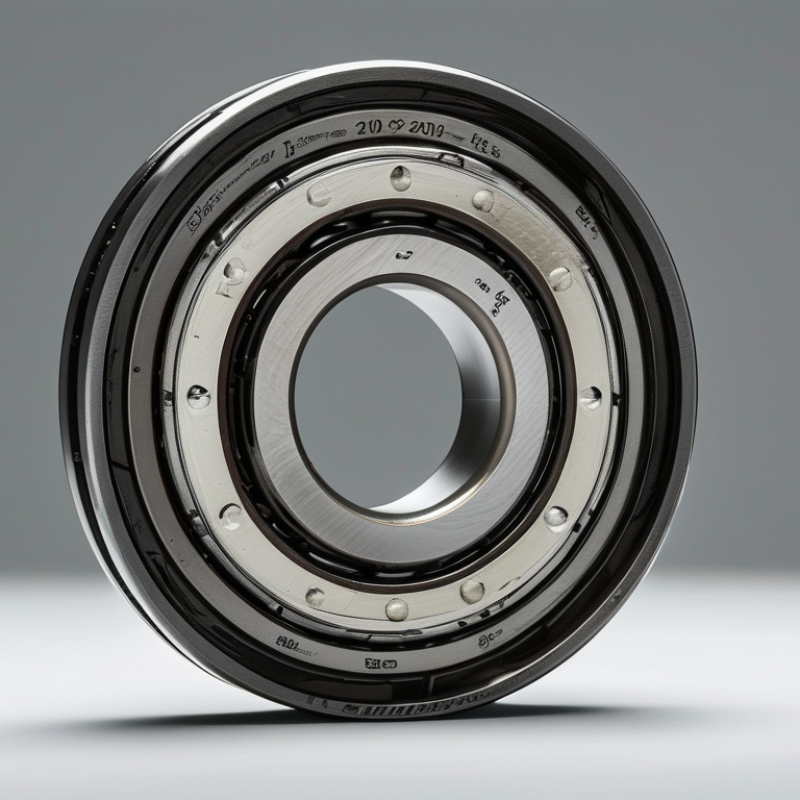
2026 Best Wheel Hub Bearing Types for Global Buyers

Wheel Hub Bearing Basics and Their Role in Vehicle Performance

Wheel hub bearings support the wheel while allowing smooth rotation. They carry vehicle weight, cornering forces, braking loads, and road impacts. Most passenger vehicles use sealed ball bearings for balanced speed and durability. Heavier vehicles may use tapered roller bearings because they handle greater radial and axial loads. Integrated hub units also include mounting flanges and speed sensors. The correct type depends on vehicle mass, steering design, driving speed, and road conditions.

During a practical inspection, listen for a low growl that rises with vehicle speed. A damaged bearing may also create uneven tire wear or steering vibration. Check wheel play at the twelve and six o’clock positions. Excess movement needs careful measurement. Heat around one hub after a short drive can indicate excessive friction. Correct preload matters. Too much tightness creates heat, while insufficient preload allows movement. A damaged seal can let water, dust, and grit reach the rolling surfaces.

Wheel hub bearings influence braking stability, steering accuracy, cabin noise, and tire life. A common mistake is blaming every humming sound on the bearing. Tire patterns and drivetrain components can produce similar noise. Measurement should replace guesswork. Service data, correct tightening torque, and clean installation improve reliability. Even experienced technicians can overlook a contaminated mounting surface. I would not call the process flawless. A final play check after installation remains easy to skip, yet it can reveal a serious problem.

Major Wheel Hub Bearing Types for Different Vehicle Applications

2026 Best Wheel Hub Bearing Types for Global Buyers

Major Wheel Hub Bearing Types for Different Vehicle Applications

Passenger cars commonly use deep-groove ball bearings for smooth, quiet operation. They suit moderate loads and frequent urban driving. Compact wheel hubs also reduce rotating weight. However, poor sealing can allow water and dust to enter during winter or coastal use.

SUVs and light trucks often need tapered roller bearings. Their separated raceways handle higher radial and axial loads. This design supports heavier vehicles, uneven roads, and occasional towing. Angular-contact ball bearings can also work well when steering precision and compact packaging matter. The correct preload remains critical. Too much creates heat, while too little permits wheel play.

Heavy commercial vehicles usually require robust tapered roller designs or integrated hub units. These applications demand strong fatigue resistance, reliable lubrication, and simple inspection access. Hub units may include speed sensors for braking and stability systems. They reduce assembly errors, but replacement costs can be higher. Trailer axles need careful attention to load ratings and adjustment procedures. I have seen failures caused by incorrect torque, not weak bearing material. The choice is not always obvious. Buyers should compare vehicle weight, axle design, operating temperature, road conditions, sealing quality, and sensor requirements. Service records and verified test data provide more confidence than appearance alone. One overlooked detail can shorten bearing life.

2026 Best Wheel Hub Bearing Types for Global Buyers - Major Wheel Hub Bearing Types for Different Vehicle Applications

Bearing Type Typical Vehicle Applications Primary Load Capability Main Design Features Sealing and Lubrication ABS/Speed Sensor Compatibility Service Characteristics Typical Selection Priority
Single-Row Deep-Groove Ball Bearing Light passenger vehicles, compact cars, small trailers and low-load rotating assemblies Primarily radial loads with moderate axial loads in both directions Low friction, compact cross-section and good high-speed capability; usually installed with separate hub and mounting components Commonly supplied as a sealed, pre-greased unit; some serviceable arrangements use external seals and specified grease Sensor provision depends on the hub design; a separate tone ring or magnetic encoder may be required Generally economical to replace; correct housing fit, shaft fit and sealing are essential Compact size, low rotational resistance and cost-sensitive applications
Single-Row Tapered Roller Bearing Light commercial vehicles, pickups, trailers and serviceable front wheel assemblies High radial loads and substantial axial loads in one direction; normally used as a matched pair for bidirectional axial loading Inner and outer rings with tapered rollers; adjustable endplay or preload is possible during installation Often open or serviceable with separate grease seals; requires correct high-load wheel-bearing grease Usually requires a separate ABS tone ring or sensor arrangement Re-greasing and adjustment may be required; incorrect preload can cause overheating or looseness Heavy radial and axial loads, serviceability and adjustable wheel-end design
Double-Row Angular-Contact Ball Bearing Passenger cars, compact SUVs and front or rear wheel positions requiring integrated two-direction support Combined radial and axial loads in both directions Two rows of balls provide greater moment capacity than a single-row bearing while retaining relatively low friction Normally permanently greased and sealed for life; seal quality is critical in water and road-salt environments Can be manufactured with an integrated magnetic encoder or supplied for use with a separate sensor ring Usually replaced as a complete sealed bearing; installation direction matters when an encoder is integrated Balanced performance, moderate loads and compact suspension packaging
Double-Row Tapered Roller Bearing Light trucks, SUVs, off-road vehicles, trailers and higher-load wheel-end assemblies High radial, axial and overturning-moment loads in both directions Two tapered roller rows provide high stiffness and load capacity; may be supplied as a pre-adjusted cartridge Sealed pre-greased versions are common; serviceable versions require compatible grease and effective seals Sensor integration varies; a separate encoder, tone ring or wheel-speed sensor may be used Higher installation sensitivity; correct torque and endplay or preload control are important High stiffness, impact resistance and heavy-duty wheel loads
Generation 1 Wheel Hub Bearing Unit Passenger cars and light commercial vehicles with separate hub, knuckle and wheel-speed components Combined radial and axial wheel loads according to the internal bearing arrangement Self-contained double-row bearing; mounting flange and wheel flange are generally not integrated Factory-filled grease with integrated seals; normally non-repairable and replaced as a unit May include no encoder, a passive tone ring or a separate magnetic sensing arrangement Simpler construction but requires accurate press-fitting and protection against seal damage Compact replacement bearing with a relatively simple mounting arrangement
Generation 2 Flanged Wheel Hub Bearing Unit Passenger cars, SUVs and light commercial vehicles with bolt-in wheel-end assemblies Combined radial, axial and moment loads transferred through the mounting flange One flange mounts to the suspension knuckle or axle; the other may carry the wheel or brake components Sealed and pre-lubricated for life; protection against water, dust and road debris is essential Often available with an integrated encoder or a dedicated wheel-speed sensor interface Faster replacement than a press-fit bearing; bolt pattern, flange offset and sensor orientation must match Installation efficiency, repeatable positioning and reduced workshop adjustment
Generation 3 Integrated Wheel Hub Unit Modern passenger cars, SUVs, electric vehicles and electronically controlled chassis systems High combined radial, axial and moment loads with controlled wheel-flange stiffness Bearing, wheel flange and mounting flange are integrated; some designs include drive-flange or sensor features Factory-sealed and permanently lubricated; sealing and internal clearance are set during manufacture Frequently designed with an integrated active magnetic encoder for ABS, traction control and stability systems Normally replaced as a complete module; connector routing, encoder direction and tightening torque require careful checking High integration, precise sensor performance and reduced assembly time
Heavy-Duty Hub Unit with Tapered Rollers Medium-duty trucks, heavy trucks, buses, agricultural equipment and construction vehicles Very high radial, axial and shock loads; suitable for high wheel-end loads when correctly specified Large tapered rollers, high stiffness and robust wheel-end construction; may use an adjustable or pre-set arrangement May be oil-lubricated or grease-lubricated depending on the axle and hub design; seals must match the lubricant system ABS or wheel-speed sensing is application-dependent and may use a separate sensor and tone ring Requires accurate endplay or preload measurement, proper torque procedures and scheduled inspection Maximum load capacity, durability, serviceability and resistance to severe operating conditions
Electric Vehicle Low-Friction Hub Bearing Unit Battery-electric passenger cars, hybrid vehicles and energy-efficiency-focused platforms Combined wheel loads with emphasis on low drag, high stiffness and accurate wheel-speed measurement Optimized internal clearance, seals, grease fill and torque characteristics; may be based on an integrated Generation 2 or Generation 3 design Low-friction seals and long-life grease are commonly selected; the unit remains factory-sealed High-resolution active encoder compatibility may be required for ABS, regenerative braking and stability-control functions Replacement is normally module-based; sensor signal quality and electrical connector protection are critical Low rolling resistance, accurate sensing, low noise and energy efficiency
Selection note: Final bearing selection should be based on the vehicle application, axle position, load rating, bore and outside diameter, flange geometry, mounting pattern, internal clearance, sealing design, wheel-speed sensor configuration and approved installation torque.

How to Compare Bearing Materials, Designs, and Load Ratings

Global buyers should compare wheel hub bearings by duty cycle, not catalog size. Through-hardened bearing steel usually offers strong fatigue resistance and predictable cost. Stainless steel suits corrosive roads, but its load capacity can be lower. Ceramic rolling elements reduce electrical damage risk in some electrified axles. They also raise price and require careful design. More expensive is not automatically better.

Design changes performance. A double-row angular-contact unit carries radial, axial, and cornering loads in one compact assembly. Tapered designs can manage high combined loads, but preload adjustment becomes critical. Integrated seals need resistance to water, dust, and grease leakage. Check seal temperature limits near brakes. The IEA’s Global EV Outlook 2025 reported more than 17 million electric cars sold globally in 2024. That growth makes low-friction sealing and electrical protection more relevant, though not universally necessary. I may overstate this point; vehicle architecture still decides the bearing.

Compare dynamic rating C with static rating C0, never with geometry alone. Under ISO 281:2007, L10 life equals one million revolutions when equivalent load equals C. Life falls sharply as load rises. Small overloads matter. Ask suppliers for C, C0, grease type, seal test results, and actual clearance. Validate peak cornering loads, impact loads, and press-fit tolerances. A bearing surviving a laboratory test may fail after grit enters a damaged seal. Use traceable material certificates and dimensional inspection records. That evidence is more useful than a vague “heavy-duty” claim.

Key Selection Factors for Global Buyers in 2026

2026 Best Wheel Hub Bearing Types for Global Buyers

Key Selection Factors for Global Buyers in 2026

Choosing a wheel hub bearing starts with the vehicle’s real operating conditions, not only its catalog dimensions. Ball bearings suit many passenger vehicles with moderate loads and compact layouts. Tapered roller bearings handle higher radial and axial loads, especially on heavier vehicles. Integrated hub units can simplify installation and support built-in speed sensing. They may also increase replacement costs.

Road conditions deserve close attention. Coastal fleets need strong sealing against salt and moisture. Cold regions require grease that remains stable during winter starts. High-temperature routes can expose weak seals and poor lubrication quickly. Check load ratings, rotational speed, clearance, flange accuracy, and seal construction. Small dimensional errors can create noise, vibration, or uneven tire wear.

Global buyers should request material certificates, inspection records, torque guidance, and batch traceability. Confirm compatibility with braking systems and wheel-speed sensors before ordering. Packaging must prevent corrosion during long sea transport. Delivery reliability matters, but low price alone can hide costly failures. In one practical review, a bearing passed dimensional checks yet failed early because the application load was underestimated. That mistake was avoidable. Buyers should compare laboratory data with field feedback, while admitting that test results cannot represent every road, climate, or driving habit.

2026 Best Wheel Hub Bearing Types for Global Buyers

Key selection factors for matching wheel hub bearing designs with vehicle load, speed, alignment, and service requirements.

The 1–5 scores represent typical engineering suitability based on established bearing design characteristics, not manufacturer test results. Tapered roller and angular-contact designs are generally strong choices for combined radial and axial wheel loads, while spherical roller bearings provide the highest tolerance for housing or shaft misalignment.

Installation, Maintenance, and Quality Inspection Guidelines

Choosing the best wheel hub bearing in 2026 requires more than matching dimensions. Double-row angular contact bearings suit many passenger vehicles, while tapered roller designs handle heavier loads. Check load data, mounting space, seal arrangement, and operating temperature before ordering. A bearing can look correct and still fail early.

In my workshop experience, clean handling prevents more damage than forceful installation. Keep the hub, spindle, and tools free from dust. Measure twice. Use a calibrated torque wrench and follow the specified tightening sequence. Never hammer the bearing race or connector. During installation, inspect mating surfaces for burrs, corrosion, and oval wear. Press only on the ring receiving the installation load. For integrated hub units, protect the encoder ring and avoid sharp sensor cable bends.

After fitting, rotate the hub by hand and check for roughness, binding, or unusual play. A short road test should include low-speed turns, braking, and listening for humming. Stop if warning lamps appear. Maintenance begins with scheduled inspection, not noise alone. Record mileage, play measurements, torque values, and test conditions for traceability. Inspect seals for grease leakage and nearby suspension damage. Excessive heat, uneven tire wear, or vibration may indicate a related fault. Quality inspection should verify material certificates, dimensional reports, hardness results, seal condition, and batch identification. A polished surface is not proof of quality. Noise testing and magnetic inspection can reveal defects that visual checks miss.

FAQS

: What does a wheel hub bearing do?

: It supports the wheel and allows smooth rotation. It carries vehicle weight, cornering forces, braking loads, and road impacts. A small part. A major responsibility.

Which bearing design suits a vehicle?

Double-row angular-contact bearings suit many passenger vehicles. Tapered roller bearings handle heavier combined loads. The correct choice depends on vehicle mass, steering design, speed, and road conditions. Catalog size alone is not enough.

What symptoms suggest a damaged wheel hub bearing?

Listen for a low growl that rises with vehicle speed. Steering vibration, uneven tire wear, or wheel movement may also appear. One hot hub after a short drive deserves attention. Noise can mislead.

How can wheel play be checked?

Rock the wheel at the twelve and six o’clock positions. Excess movement requires careful measurement. Do not rely on hand feel alone. Guesswork causes mistakes.

Can tire noise be confused with bearing noise?

Yes. Tire patterns and drivetrain components can create similar humming sounds. Compare noise changes during turns, acceleration, and coasting. Use measurements and service data before replacing parts. Listen carefully.

Which materials should buyers compare?

Through-hardened bearing steel offers predictable fatigue resistance and cost. Stainless steel suits corrosive roads but may carry lower loads. Ceramic rolling elements can reduce electrical damage in some electrified axles. Higher price does not guarantee better performance.

What supplier information matters?

Request dynamic rating, static rating, grease type, seal test results, and actual clearance. Ask for material certificates and dimensional inspection records. Verify peak cornering loads, impact loads, and press-fit tolerances. “Heavy-duty” is too vague.

How should a hub bearing be installed?

Keep the hub, spindle, and tools free from dust. Inspect mating surfaces for burrs, corrosion, and oval wear. Use a calibrated torque wrench and the specified tightening sequence. Never hammer the bearing race or connector.

What checks should follow installation?

Rotate the hub by hand and check for roughness, binding, or unusual play. Road-test low-speed turns and braking while listening for humming. Record mileage, torque values, play measurements, and test conditions. A final play check is easy to skip. It should not be.

Conclusion

This guide to the 2026 best Wheel Hub Bearing types explains how these essential components support smooth wheel rotation, vehicle stability, braking performance, and driving safety. It introduces major bearing designs for passenger cars, commercial vehicles, off-road equipment, and other applications, highlighting how operating conditions influence the right choice. Readers will learn how material quality, sealing structure, internal clearance, precision, and load ratings affect durability, noise control, heat resistance, and overall performance.

For global buyers, the guide also outlines practical selection factors, including vehicle compatibility, road and climate conditions, expected service life, quality consistency, documentation, and supply reliability. It provides clear recommendations for installation, lubrication where applicable, torque control, contamination prevention, and routine inspection. By comparing technical specifications and checking for manufacturing defects before use, buyers can reduce premature failures, maintenance costs, and safety risks while selecting dependable Wheel Hub Bearing solutions for different markets and vehicle requirements.


Ethan

Ethan

Ethan is a seasoned marketing professional with a deep expertise in our company's innovative product line. With a passion for sharing knowledge and insights, he takes the lead in regularly updating our corporate blog, where he explores industry trends, product features, and effective marketing......