An Auto Wheel Bearing is a small but essential component between a vehicle’s wheel and suspension. It allows the wheel to rotate smoothly while supporting the vehicle’s weight. Without it, metal surfaces would face excessive friction, heat, and wear. The result could be noisy, rough, and unsafe driving.
Inside the bearing, hardened steel balls or rollers move between precisely shaped races. Grease reduces friction, while protective seals help keep water, dust, and road grit away from the moving parts. Many modern hub assemblies also include an ABS speed sensor. This sensor sends wheel-speed information to the braking and stability systems.
The working principle is simple.
The wheel turns around the bearing’s inner race. The outer race remains secured within the hub or steering knuckle. Proper adjustment keeps the wheel aligned and prevents unwanted movement. In my experience, a faint humming sound that rises with speed often deserves attention, although tires can produce similar noise. That detail is easy to misjudge.
This guide explains how an Auto Wheel Bearing works, where it is installed, and which symptoms may indicate wear. It also considers inspection methods, replacement choices, and manufacturer service requirements. A loose wheel, damaged seal, or failed bearing should never be ignored. However, noise alone does not prove bearing failure. A qualified technician should confirm the cause through physical checks, road testing, and appropriate diagnostic equipment. Small differences between vehicle designs matter. Always follow the vehicle maker’s specifications.
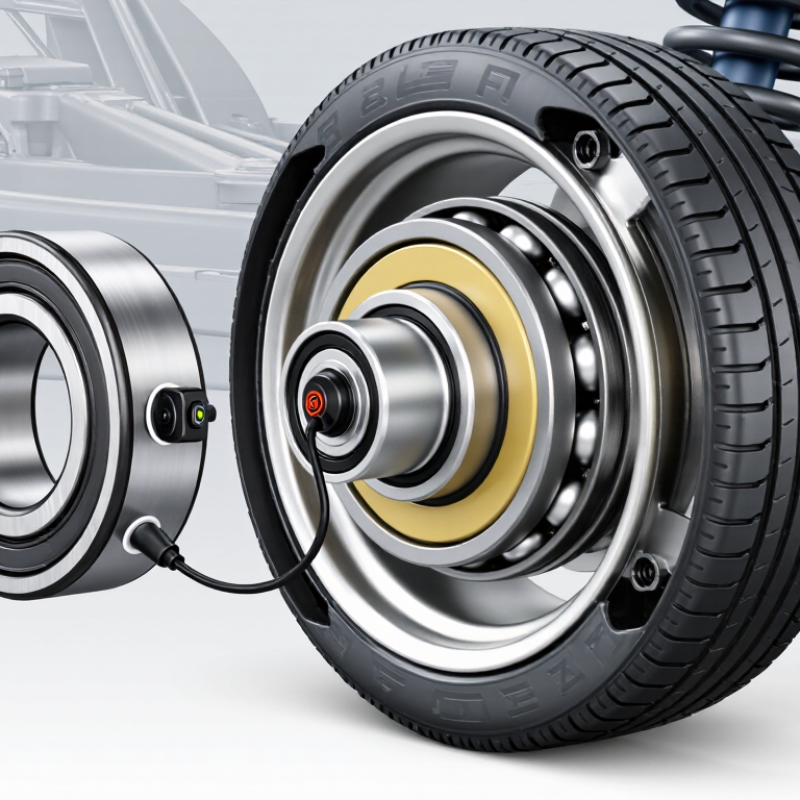
An auto wheel bearing is a precision component inside the wheel hub or steering knuckle. It uses hardened balls or rollers to support the vehicle’s weight while allowing the wheel to rotate smoothly. The bearing handles radial loads from the road and axial loads during cornering. It also helps maintain accurate wheel alignment.
Most modern units are sealed. Grease stays inside, while water and road dust stay outside. Some assemblies include an integrated speed sensor for the anti-lock braking system. Not every design does. ISO 281:2007 calculates bearing rating life at a 90% reliability level, meaning 10% may not reach that estimate under identical conditions. That figure is useful, but real roads are less polite.
A damaged bearing may produce a humming sound that rises with road speed. The noise can change during a gentle turn. Technicians also check wheel play, vibration, tire wear, and sensor signals. A raised vehicle can reveal rough rotation, but noise diagnosis is not always clean. Tires, brakes, and driveline parts can imitate bearing failure. In practical service data, contamination and poor installation remain recurring causes of early damage. Correct torque matters. So does pressing on the proper bearing race. A small installation mistake can create internal stress before the vehicle travels one mile.
An auto wheel bearing supports the wheel while allowing it to rotate smoothly. It sits between the wheel hub and the axle or steering knuckle. Inside, hardened balls or rollers move along curved races. A seal keeps grease inside and road water outside.
Small parts, important job.
When the vehicle moves, the bearing carries the vehicle’s weight and manages forces from braking, cornering, and uneven pavement. It reduces friction between stationary and rotating components. This helps the wheel turn with less heat and energy loss.
During a workshop inspection, a technician may lift the wheel and check for looseness, rough rotation, or unusual noise. A low humming sound can change when the vehicle turns. That detail often matters.
Wheel bearings support motion best when they remain correctly lubricated and tightly fitted. A damaged bearing may produce grinding, vibration, or uneven tire wear. Yet diagnosis is not always simple. Tire noise can sound similar. Suspension wear can confuse the inspection.
I have seen how one neglected symptom grows louder after weeks of ordinary driving. That delay can increase repair difficulty.
A careful check should include wheel play, seal condition, and nearby components. Never judge the bearing from sound alone. Temperature also offers a clue; excessive heat near the hub deserves attention.
The design seems simple, but its working conditions are severe. Dirt, water, heavy loads, and repeated impacts all test the bearing’s reliability.
What Is an Auto Wheel Bearing and How Does It Work?
Main Components and Their Functions
An auto wheel bearing supports the vehicle’s weight while allowing the wheel to rotate with minimal friction. It sits between the wheel hub and the steering knuckle. The bearing’s inner ring connects to the axle or hub shaft. Its outer ring fits into the hub or knuckle. These rings create precise running tracks.
Between them, hardened steel balls or rollers carry the load. Balls suit many passenger vehicles because they handle rotation efficiently. Rollers can manage heavier radial loads. A cage keeps each rolling element evenly spaced. Without it, contact becomes uneven and heat rises quickly. Small parts, but important ones.
The seal blocks water, dust, and grease loss. Many modern units use a sealed design, so routine lubrication is not normally possible. ISO 281 defines bearing rating life using the L10 value, meaning 90% of identical bearings are expected to reach that life under stated conditions. Real roads are less controlled. Potholes, incorrect torque, corrosion, and impact damage can shorten service life.
A hub assembly may also contain an encoder ring for the wheel-speed sensor. That signal supports anti-lock braking and stability systems. A damaged encoder can create warning lights before obvious bearing noise appears. In practice, a low growl often changes during cornering. Still, noise alone can mislead. Tire wear, brake drag, and alignment faults may sound similar. A careful inspection should check play, rotation smoothness, temperature, and sensor readings.
An auto wheel bearing is a precision assembly that allows the wheel and hub to rotate smoothly while supporting vehicle weight and handling radial and axial loads.
The chart shows the calculated wheel-bearing rotational speed at different vehicle speeds, using a representative tire diameter of 0.65 m. The relationship is based on the wheel-speed formula: RPM = vehicle speed × 1000 ÷ (π × tire diameter × 60).
An auto wheel bearing lets the wheel rotate smoothly around the hub while carrying the vehicle’s weight. Inside, hardened balls or rollers move between precisely shaped races. Grease fills the sealed cavity, reducing friction and protecting the metal surfaces.
During driving, the bearing faces constant radial load from the vehicle’s weight. Cornering adds side load, while braking and acceleration create changing forces through the hub. On a rough road, a sharp impact can briefly multiply those forces. The result is heat, vibration, and gradual surface fatigue. A 2021 technical review in Tribology International identifies lubrication loss, contamination, and excessive load as major causes of rolling-bearing damage. Small seals matter more than they look.
The driver may notice a low humming sound that rises with road speed. It can change during a gentle turn. That clue is useful, but not perfect. Tire wear and drivetrain noise can sound similar. The U.S. Department of Transportation’s Large Truck Crash Causation Study linked tire or wheel problems to 5.5% of critical crash factors, although the figure does not isolate wheel bearings. Technicians therefore check play, rough rotation, seal condition, and temperature after a road test. ISO 15243 also classifies bearing failures by damage patterns, helping separate fatigue from contamination or poor installation. I would not trust noise alone. A quiet bearing can still be deteriorating.
An auto wheel bearing supports the wheel, hub, and part of the vehicle’s load. It also allows smooth rotation with minimal friction. Common designs include ball bearings, tapered roller bearings, and sealed hub-bearing assemblies. Tapered rollers handle combined radial and cornering loads well. Sealed units need less routine lubrication. They are not maintenance-free forever.
The 2024 S&P Global Mobility vehicle-age analysis reported an average U.S. vehicle age of 12.6 years. Older vehicles deserve closer bearing checks. AAA’s 2023 Your Driving Costs report estimated annual repair and maintenance costs at about $792 per vehicle. A bearing problem can add unnecessary tire and suspension damage. Watch for a humming, growling, or rumbling sound that rises with road speed. The noise may change during gentle turns. A loose wheel, uneven tire wear, vibration, or an ABS warning also deserves attention. A hum is not a diagnosis.
During tire or brake service, a technician should check play, rough rotation, seal condition, and fastener torque. Some sealed bearings cannot be repacked. They require replacement when damaged. Incorrect torque can shorten their life. Water intrusion is another quiet threat, especially after flooded roads or aggressive pressure washing. I would not rely on sound alone; tires and driveline parts can imitate bearing noise. Confirming the fault before replacement remains the part people sometimes rush.
| Bearing Type or Area | Basic Construction | How It Works | Typical Applications | Advantages | Common Limitations |
|---|---|---|---|---|---|
| Ball Bearing | Hardened steel balls held between inner and outer races, usually with a cage and seals. | The balls roll between the races, reducing sliding friction while supporting radial and limited axial loads. | Some front or rear wheel assemblies, especially where moderate loads and compact dimensions are suitable. | Low rolling resistance, smooth operation, compact design, and good performance at higher rotational speeds. | Generally less suitable than tapered rollers for very high combined loads or heavy impact loading. |
| Tapered Roller Bearing | Conical rollers run between matching inner and outer raceways. | The angled rollers carry radial load and axial thrust together; correct preload or endplay is important. | Many serviceable hub-and-spindle designs, particularly on applications exposed to substantial wheel loads. | High load capacity and strong resistance to combined radial and lateral forces. | Requires accurate adjustment, suitable lubricant, and careful installation; incorrect preload can cause overheating or premature wear. |
| Cylindrical Roller Bearing | Short cylindrical rollers contact the raceways along relatively broad lines. | The line contact distributes radial loads efficiently while allowing certain designs to accommodate limited axial movement. | Selected wheel-end and drivetrain applications where high radial capacity is needed. | High radial-load capacity and good stiffness. | Axial-load capability depends strongly on the design; alignment and lubrication remain important. |
| Sealed Hub Bearing Unit | A preassembled bearing, hub flange, seals, and sometimes a wheel-speed sensor or tone ring in one unit. | The integrated assembly supports the wheel and transfers loads while maintaining factory-set internal clearance. | Many modern front and rear suspension systems. | Fast replacement, sealed lubrication, consistent preload, and reduced adjustment requirements. | Usually replaced as a complete unit; contamination, impact, or incorrect torque can damage the assembly. |
| Serviceable Wheel Bearing | Separate bearing components that can be cleaned, inspected, repacked, and adjusted. | Fresh grease forms a protective film between rolling elements and raceways while seals or dust caps limit contamination. | Older or specifically designed hub-and-spindle assemblies. | Individual components may be serviced, and inspection can identify wear before complete failure. | Requires correct grease, cleaning, seal replacement, adjustment, and periodic inspection. |
| Inspection Dimension | Normal Condition | Possible Wear Sign | Likely Causes | Recommended Action |
|---|---|---|---|---|
| Noise | Quiet, smooth rotation with no speed-related rumble. | Humming, growling, grinding, or rumbling that changes with vehicle speed or cornering load. | Pitted raceways, damaged rolling elements, inadequate lubrication, contamination, or impact damage. | Confirm the source with a complete wheel-end inspection; replace the bearing or hub unit if damage is verified. |
| Wheel Play | No noticeable looseness when the wheel is checked with the vehicle safely supported. | Movement or clunking when the wheel is rocked by hand. | Worn bearing, incorrect adjustment, loose mounting hardware, or wear in related suspension parts. | Do not rely on play alone for diagnosis; check the hub, bearing, ball joint, tie-rod end, and fasteners. |
| Vibration | Stable steering and body behavior at normal road speeds. | Steering or floor vibration that may increase with speed or during braking. | Bearing looseness or damage, wheel imbalance, tire defects, bent components, or brake-related issues. | Inspect the entire wheel-end system rather than assuming the bearing is the only cause. |
| Temperature | No abnormal heat or burning smell after normal driving. | One wheel-end is noticeably hotter than the others, or grease shows signs of overheating. | Excessive preload, insufficient grease, seal failure, bearing damage, or a dragging brake. | Allow components to cool and diagnose promptly; avoid touching hot parts directly. |
| ABS or Wheel-Speed Warning | No warning light and reliable wheel-speed data. | ABS, traction-control, or stability-control warning, sometimes accompanied by an erratic signal. | Damaged sensor, wiring, encoder or tone ring, excessive bearing play, or a poor electrical connection. | Scan the system and inspect the sensor, wiring, hub, and bearing before replacing parts. |
| Lubrication and Seals | Grease remains contained, and seals or dust caps are intact. | Grease leakage, torn seal, water intrusion, rust staining, or visible contamination. | Age, improper installation, road debris, water exposure, overfilling, or damaged sealing surfaces. | Use the specified lubricant and seal; replace contaminated or damaged bearings rather than washing damage away. |
It lets the wheel rotate around the hub while supporting vehicle weight. Hardened balls or rollers move between shaped races. Grease reduces friction inside the sealed cavity.
Vehicle weight creates radial load. Cornering adds side load. Braking and acceleration change forces through the hub. Rough roads can create sharp impact loads.
You may hear humming, growling, or rumbling. The sound usually rises with road speed. It may change during a gentle turn. Noise is not proof.
Yes. Uneven tire wear and drivetrain parts can sound similar. I would not trust sound alone. A quiet bearing can still be deteriorating.
Watch for wheel play, vibration, uneven tire wear, or an ABS warning. A rough feeling during rotation also matters. Small seals matter.
The technician can road-test the vehicle carefully. Then they check play, rough rotation, seal condition, temperature, and fastener torque. Confirm the fault before replacement.
Usually, sealed units need less routine lubrication. However, they are not maintenance-free forever. Some cannot be repacked and need replacement when damaged.
Yes. Flooded roads can push water past weakened seals. Aggressive pressure washing may create similar risks. Contamination can remove protective grease and damage metal surfaces.
Older vehicles deserve more careful inspections, especially during tire or brake service. A worn bearing may also damage tires or suspension parts. That extra check is easy to skip.
An Auto Wheel Bearing is a precision component that allows a vehicle’s wheels to rotate smoothly while supporting the weight of the car and handling forces from acceleration, braking, and cornering. It reduces friction between moving parts and helps maintain stable wheel alignment. Its main components typically include rolling elements, inner and outer races, seals, and lubricant. Together, these parts create a controlled contact surface that transfers loads efficiently and protects the bearing from moisture, dirt, and excessive heat.
During driving, the wheel bearing continuously rotates with the wheel hub, enabling quiet and consistent motion over different road conditions. Common types include ball bearings, tapered roller bearings, and integrated hub assemblies. Wear may appear as humming, grinding, vibration, uneven tire wear, looseness, or changes in noise while turning. Regular inspections, proper wheel installation, suitable lubrication, and timely replacement can help maintain safe handling and extend the service life of the wheel bearing system.

Jito Bearing