Choosing the best Taper Roller Bearing from China requires more than comparing prices or reading polished product pages. Performance depends on load capacity, dimensional accuracy, heat treatment, lubrication, and supplier consistency. A bearing may look flawless in a catalog, yet fail early when the fit, preload, or operating temperature is misunderstood.
This guide examines Chinese manufacturers through practical purchasing criteria. We consider material quality, raceway hardness, roller geometry, sealing options, and production controls. Relevant technical references include ISO 281 for rating life and ISO 355 for inch-series dimensions. Factory certifications can support trust, but certificates alone cannot prove dependable performance. Sample testing matters.
Look closely at the details.
A reliable supplier should provide inspection records, material certificates, tolerance data, and clear batch traceability. Ask how the factory controls grinding, assembly cleanliness, and final noise inspection. In real applications, a small dimensional error can create vibration, uneven wear, or excessive heat. That is why experienced buyers test bearings under realistic loads rather than relying on brochures.
The “best” supplier is not always the largest one. It may be a specialized factory that understands agricultural machinery, gearboxes, trailers, or heavy industrial equipment. Communication also matters, especially when custom clearance, packaging, or replacement support becomes necessary. Some manufacturers offer impressive specifications but weak after-sales responses. That weakness should not be ignored.
This comparison also recognizes uncertainty. Supplier capabilities can change, and independent verification remains essential. By examining evidence instead of promises, buyers can identify Chinese Taper Roller Bearing manufacturers that balance quality, cost, delivery reliability, and long-term service.
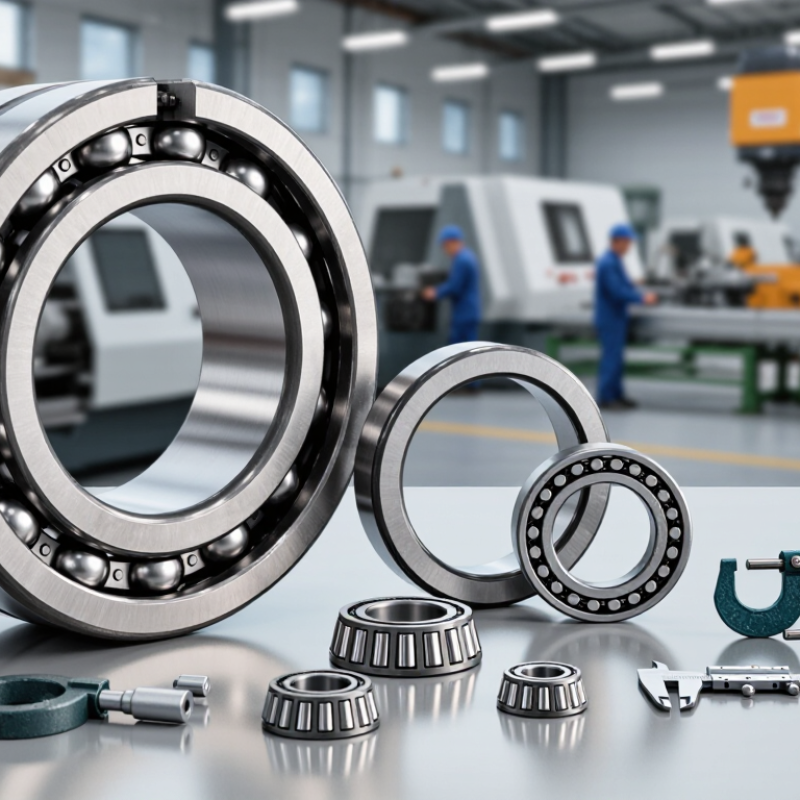
Choosing the best taper roller bearings from China starts with standards, not attractive catalog photos. ISO 355:2019 defines the principal dimensions and designation system for metric taper roller bearings. These dimensions control interchangeability, but they do not guarantee durability. A bearing marked 302, 303, or 313 may fit correctly while showing very different load capacity and stiffness.
Geometry matters at the contact line. The cone angle affects axial load capacity, while roller crowning helps reduce edge stress. ISO 281:2007 uses the basic rating life equation, L10 = (C/P)10/3 for roller bearings. Here, C is the dynamic load rating and P is the equivalent load. L10 means that 90% of identical bearings are expected to survive the calculated life under stated conditions. It is not a promise.
Check the details.
For Chinese suppliers, request dimensional inspection records, hardness results, and steel cleanliness data. Ask whether C and C0 values were calculated under ISO 281 methods or verified through testing. Heat treatment variation can change raceway hardness and residual stress. Seals, grease, preload, and mounting accuracy also influence field life. I have seen specifications look excellent, yet installation records revealed excessive shaft runout. That gap matters. My checklist is useful, but imperfect. Independent sampling, traceable batch numbers, and application testing remain stronger evidence than a high catalog rating. Industry quality audits commonly treat process capability, inspection frequency, and corrective-action records as key supplier indicators. Nevertheless, one overlooked lubricant can distort an otherwise careful comparison.
What Are the Best Taper Roller Bearings from China?
How to Compare Chinese Bearings Using ISO 281 Life Calculations
A credible comparison begins with numbers, not country of origin. ISO 281 provides a common method for estimating basic rating life. For tapered roller bearings, use L10 = (C/P)^(10/3) million revolutions. C represents the basic dynamic load rating. P represents the equivalent dynamic bearing load. The result indicates a 90% reliability level under defined conditions. It is not a warranty.
Suppose C is 150 kN and P is 30 kN. The calculated life is roughly 2,135 million revolutions. At 600 rpm, that equals about 59,300 operating hours. That figure looks impressive. Yet it can mislead. Compare bearings under identical loads, speeds, fits, lubrication, and operating temperatures. Include radial and axial forces, because tapered bearings often carry both. Ask for documented C values, dimensional inspection results, steel quality records, heat-treatment data, and batch traceability.
ISO 281 does not fully capture contamination, poor installation, misalignment, or lubricant failure. Modified life calculations require reliable inputs. Otherwise, extra factors can create false confidence. I would not accept a polished certificate alone. Check actual samples. Measure noise, runout, preload, and raceway finish when possible. My own comparison sheets have changed after field failures. Calculated life did not explain every damaged raceway. That limitation deserves attention.
This screening chart compares generic tapered roller bearing size groups without using company or brand data. Basic rating life is calculated according to ISO 281 using L10 = (C/P)10/3, where C is the basic dynamic load rating in kN and P is the equivalent dynamic bearing load in kN. A higher calculated L10 value indicates longer theoretical life under the stated load, but actual selection should also consider lubrication, contamination, mounting accuracy, speed, and reliability requirements.
The strongest Chinese suppliers are not chosen by price alone. IATF 16949 certification shows disciplined automotive quality processes, while ISO 9001 supports broader production control. Ask for current certificates, audit scope, and certification bodies. Check whether the certificate covers the actual bearing factory.
Look closer.
During supplier evaluation, request lot-level traceability from steel heat numbers to final inspection records. Reliable manufacturers can connect each bearing to forging, heat treatment, grinding, assembly, and packaging data. Useful records include hardness results, raceway profile measurements, internal clearance, surface roughness, and rotational noise checks. QR labels or stamped batch codes should match digital inspection files.
Practical experience suggests that documentation matters most when a problem appears months later. A traceable lot can reveal whether variation began with steel, heat treatment, or grinding. IATF procedures may also show control plans, measurement-system checks, corrective actions, and supplier monitoring. However, a certificate does not guarantee perfect bearing performance. Some records may be complete but weakly verified. That deserves attention.
Order samples from multiple production lots, not one carefully prepared batch. Measure dimensions independently and compare results with the supplier’s reports. Review packaging, rust protection, preload consistency, and noise behavior under realistic loads. Ask how nonconforming bearings are isolated and released. The answer often reveals more than a polished sales presentation. Supplier quality can improve, but verification should remain continuous.
When evaluating taper roller bearings from China, I look beyond catalog ratings. Dynamic load capacity should match the real radial and axial forces, not just the advertised number. ISO-based calculations help compare fatigue life, but mounting accuracy and lubrication also affect results. Numbers need context. A bearing with a higher rating may perform poorly if the raceway finish is inconsistent.
Speed testing should include temperature rise, vibration, and lubricant behavior. A practical test can run the bearing under load while recording heat near the outer ring. Heat changes everything. Friction torque is equally important, especially in gearboxes and wheel-end assemblies. Excessive friction may indicate rough surfaces, incorrect preload, contaminated grease, or poor roller alignment. I would request test data at the intended load and speed, rather than accept an unloaded rotation video.
Tolerance classes reveal manufacturing discipline. Check bore, outside diameter, runout, and internal clearance against the required ISO class. Small deviations can create uneven contact across the rollers. That gap matters. Reliable suppliers should provide inspection records, material certificates, hardness results, and batch traceability. In my experience, sample testing often exposes differences hidden by identical dimensions. Still, one sample cannot prove long-term consistency. Repeat testing across several production batches is more convincing, though many buyers overlook this step.
Choosing a China-made taper roller bearing starts with the axial load, not the catalog price.
A larger contact angle generally improves axial capacity, but it can increase friction and heat. Match the bearing’s dynamic and static load ratings to calculated forces, shock loads, and required service life. Keep the shaft and housing shoulders square. Small misalignment can cause uneven raceway wear. Measure twice.
For high-speed service, check limiting speed, lubricant type, preload, and internal clearance. In dusty conveyors, seals, relubrication access, and grease compatibility may matter more than maximum load.
For hot gearboxes, request heat-treatment records, hardness data, and dimensional inspection reports. A reliable supplier should provide material certificates, lot traceability, and test results linked to each shipment.
I would also request noise, vibration, and runout measurements from sampled production batches. Paperwork is not proof.
Before approval, test samples under the actual axial load, rotation, temperature, and lubrication interval. Listen for rising vibration and inspect removed grease for metallic particles. China has capable bearing manufacturers, but quality can vary between factories and production batches. That uncomfortable point deserves attention. Do not select solely by country of origin or a low quoted price. Review application calculations with an independent engineer when loads change or failure consequences are serious.
Do not compare price alone. Check current IATF 16949 and ISO 9001 certificates. Confirm the certificate covers the actual bearing factory. Also review the certification body and audit scope.
Ask for lot-level records. These should connect steel heat numbers with forging, heat treatment, grinding, assembly, and packaging. QR labels or batch codes should match digital inspection files. Small mismatch, big concern.
Review hardness, raceway profiles, internal clearance, surface roughness, and rotational noise. Runout and vibration results are also useful. Supplier reports help, but independent measurements remain necessary.
One perfect batch proves very little. Request samples from different production lots and compare dimensions independently. Check whether results stay consistent. Variation may appear later.
Start with calculated axial forces, shock loads, and required service life. A larger contact angle can improve axial capacity. However, it may increase friction and heat. Match dynamic and static ratings carefully.
Review limiting speed, lubricant type, preload, and internal clearance. Test the bearing under realistic rotation and temperature. Rising vibration may indicate trouble before visible damage appears. Listen closely.
Dusty conveyors may need effective seals, relubrication access, and compatible grease. Hot gearboxes require heat-treatment records, hardness data, and dimensional reports. Packaging and rust protection also deserve inspection.
No. Certification shows controlled processes, not flawless performance. Records can be complete but weakly verified. I would keep testing samples and reviewing corrective actions. Verification should continue.
Choosing the best Taper Roller Bearing from China requires more than comparing prices. This article explains the basics of tapered roller bearing design, including ISO 355 size standards, internal geometry, and load-rating principles. It also introduces ISO 281 life calculations as a practical method for evaluating expected service life under different radial and axial loads. Buyers can use these factors to compare products consistently rather than relying only on catalog specifications.
The guide further examines how IATF 16949, ISO 9001, process control, and full traceability reflect manufacturing reliability. Key performance indicators include dynamic load capacity, allowable speed, friction, sealing performance, and tolerance classes. Finally, it provides a selection framework based on axial-load requirements, operating temperature, lubrication, contamination, alignment, and duty cycle. By matching bearing design and verified quality data to actual operating conditions, users can identify a cost-effective, durable, and dependable China-made solution.

Jito Bearing