Choosing the right auto bearing for your vehicle is crucial. A quality auto bearing ensures smooth operation and longevity. However, with numerous options on the market, decisions can be overwhelming.
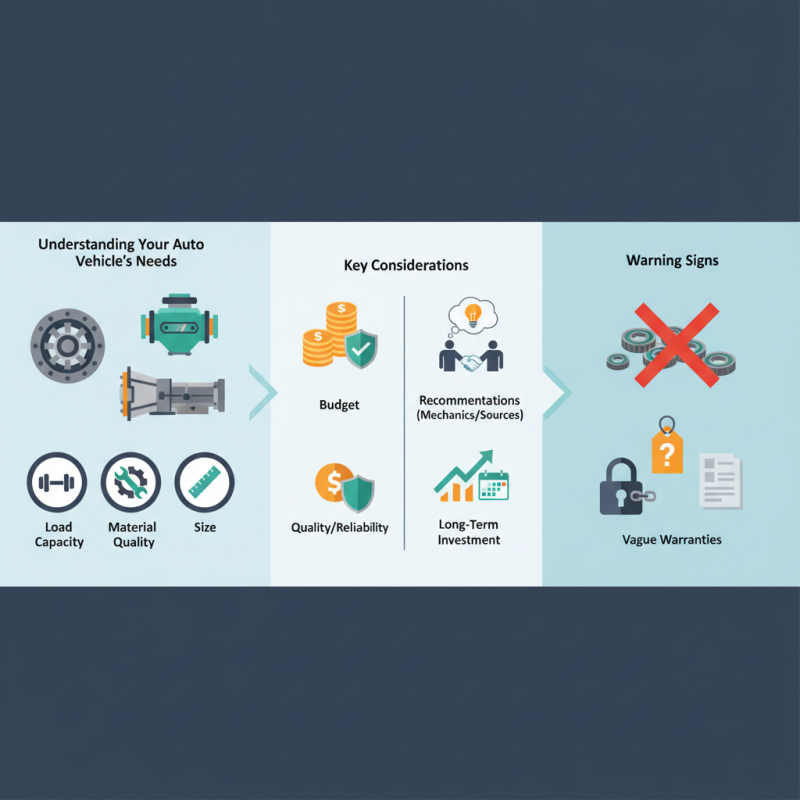
Understanding your vehicle’s needs is essential. Different vehicles require different types of auto bearings. Factors include the load capacity, material quality, and size. Each vehicle part demands specific attributes from its bearings. An informed choice enhances performance and safety.
Not every auto bearing option may fit your budget. Quality often reflects price. Some brands offer reliability, while others may not. Seek recommendations from trusted sources or mechanics. It’s wise to consider the long-term investment in your vehicle’s performance. Red flags include overly cheap options or vague warranties. These might lead to costly repairs or replacements down the line.
Auto bearings play a crucial role in vehicle performance. They enable smooth rotation of wheels and other components. This minimizes friction, allowing for more efficient power transfer. When bearings fail, it can lead to serious issues. Signs include unusual noises, vibrations, and poor steering control. Drivers may not immediately notice these changes, often leading to larger problems.
Choosing the right auto bearings is essential. Quality bearings impact lifespan and reliability. Always check for specifications that match your vehicle's needs. This includes size, material, and load capacity. Many overlook material quality when selecting bearings. A durable bearing uses top-grade steel, reducing wear and enhancing performance.
Understanding the importance of bearing maintenance cannot be overstated. Regular inspection helps prevent unexpected failures. This practice can save money and improve safety. Often, drivers replace parts without considering the bearings. Focusing on these components is key to prolonging a vehicle’s health. Ignoring them can lead to costly repairs down the line.
When selecting auto bearings, understanding the various types is crucial. There are four main categories: ball bearings, roller bearings, needle bearings, and tapered bearings. Each serves a unique purpose in vehicle performance and durability. Ball bearings, for example, are common in many applications due to their versatility. They are suitable for high-speed and low-load scenarios. Roller bearings, on the other hand, can support heavier loads but may have limitations in speed.
Needle bearings feature long, slender rollers. This design allows for greater load capacity in compact spaces. They are ideal for certain engine components. Tapered bearings combine the benefits of roller bearings and ball bearings. They can handle both axial and radial loads. This makes them popular in wheel hubs.
Choosing the right bearing type can be challenging. Incorrect choices may lead to premature wear or failure. It’s important to know the vehicle's specifications and the operating conditions. Seek expert advice when in doubt. Understanding these types can lead to better performance and longevity in your vehicle. Always reflect on the implications of your choices.
When selecting auto bearings, several key factors emerge. First, consider the type of vehicle. Each vehicle has specific requirements that dictate the kind of bearings needed.
For example, light-duty vehicles often require different specifications than heavy-duty trucks. According to industry reports, around 30% of early bearing failures can be traced back to incorrect selection based on vehicle type.
Material quality also plays a crucial role. High-quality bearings reduce friction and increase lifespan. Research indicates that bearings made from high-carbon chromium steel can improve performance by as much as 15%. This is particularly significant for vehicles exposed to extreme conditions. Furthermore, lubrication methods should not be overlooked. Using the appropriate lubricant can directly impact bearing efficiency and noise levels.
Installation is another factor to consider. Even the best bearing can perform poorly if not installed correctly. Reports suggest that improper installation accounts for nearly 20% of bearing failures in vehicles. Taking the time to review installation guidelines is often overlooked but essential. Regular maintenance checks can reveal potential issues, which can save costs and enhance safety on the road.
Assessing the quality of auto bearings is crucial for vehicle performance and longevity. Start by examining the material used in the bearing's construction. High-quality bearings typically utilize steel or ceramic, both known for their durability. Feel the weight of the bearing; heavier options often indicate better construction and materials.
Next, inspect the bearing's surface for any signs of irregularities. A smooth surface is essential, as imperfections can lead to premature wear. Check for seal quality too. Well-sealed bearings resist dirt and moisture, prolonging their operational life. A bearing that lacks seals may seem cheaper initially but could lead to higher costs down the line due to replacement needs.
Do not overlook the manufacturer's reputation. Research companies specializing in auto parts to find reliable sources. User reviews can provide insights, but consider the context. Some users may not have realistic expectations or might misuse products. Reflect on these aspects to develop a more informed perspective. Remember that investing time in quality assessment can save money and enhance vehicle safety in the long run.
When it comes to auto bearings, proper installation and maintenance are crucial for optimal performance. A report by the International Automotive Technicians Network highlights that improper bearing installation can lead to a 25% increase in failure rates. Understanding the guidance around installation can significantly extend the life of your bearings.
Choosing the right tools is vital. For instance, using a bearing press can help avoid damage during installation. Ensure the bearing is clean and free from contaminants. Even slight dirt can cause premature wear. Proper torque specifications are essential; over-tightening can lead to failure.
Regular maintenance is as important as installation. Schedule periodic inspections to check for wear. Look for signs of uneven wear, which may indicate alignment issues. Replace bearings at the first signs of damage. Follow recommended maintenance intervals. A professional study estimates that timely maintenance can increase bearing longevity by up to 40%. These proactive measures will save costs and keep your vehicle running smoothly.
| Bearing Type | Common Applications | Load Capacity (lbs) | Installation Difficulty | Maintenance Frequency |
|---|---|---|---|---|
| Ball Bearing | Wheel hubs, electric motors | 1,000 - 10,000 | Moderate | Every 12,000 miles |
| Roller Bearing | Heavy machinery, transmissions | 2,000 - 20,000 | High | Every 15,000 miles |
| Spherical Bearing | Suspension systems | 1,500 - 8,000 | High | Every 10,000 miles |
| Thrust Bearing | Crankshafts, gearboxes | 3,000 - 15,000 | Low | Every 20,000 miles |
: Auto bearings enable smooth rotation of wheels, reducing friction and improving power transfer efficiency.
Unusual noises, vibrations, and poor steering control are common indicators of bearing failure.
Check specifications like size, material, and load capacity to ensure compatibility with your vehicle.
High-carbon chromium steel is recommended, as it enhances durability and performance.
Using the appropriate lubricant significantly impacts bearing efficiency and reduces noise levels.
Improper installation can lead to nearly 20% of bearing failures, negatively affecting vehicle performance.
Inspect the material, weight, surface smoothness, and seal quality to gauge bearing durability.
Regular inspections help prevent failures, save money, and significantly improve vehicle safety.
Research companies, check user reviews, but contextualize feedback carefully for a balanced view.
Neglecting quality can lead to premature wear, costly repairs, and compromised vehicle safety.
Auto bearings play a crucial role in the overall performance of a vehicle, impacting everything from handling to fuel efficiency. Understanding the different types of auto bearings—such as ball bearings, roller bearings, and tapered bearings—helps vehicle owners make informed choices. When selecting the best auto bearing, it is essential to consider key factors like load capacity, material quality, and compatibility with the vehicle’s specifications.
To ensure optimal bearing performance, assessing the quality of auto bearings is vital. Look for indicators of durability and reliability, such as certifications and manufacturer reputation. Additionally, proper installation and maintenance practices can significantly extend the lifespan of auto bearings. By focusing on these aspects, vehicle owners can enhance their automotive experience and maintain peak performance over time.

Jito Bearing