How to Choose the Right Bearing Wheel Roller?

Time:2026-10-25 Author:Sophia
0%

Choosing the right Bearing Wheel Roller is not a matter of selecting the largest load rating. It requires a clear view of the working environment, wheel material, bearing structure, and maintenance conditions. A roller moving smoothly on a clean factory rail may fail quickly in dust, moisture, or uneven loading. Small details matter. Even the shaft fit can change performance.

Dr. Tedric A. Harris, a respected bearing analyst and author of Rolling Bearing Analysis, offered an important principle: “Bearing life depends on more than load capacity alone.” This idea remains practical when comparing Bearing Wheel Roller designs. Buyers should examine static and dynamic load ratings, travel speed, temperature range, noise, sealing, and expected duty cycles. Stainless steel may suit humid areas, while hardened steel can provide stronger wear resistance. Polymer wheels can reduce noise, but they may deform under concentrated loads. There is no universal winner.

Real selection also depends on installation experience. Measure the rail accurately. Check whether the wheel contacts its track evenly. Look for side pressure, vibration marks, and unusual heat after testing. These signs often reveal problems that a product catalogue misses. A correct part should fit the machine, not merely match a specification sheet.

Some recommendations remain imperfect. Operating conditions change. Load calculations can also rely on incomplete information. Therefore, a short field trial is valuable before full-scale purchasing. Record noise, temperature, rolling resistance, and surface wear. Then compare the results with the manufacturer’s technical data and service guidance. This careful process makes the final Bearing Wheel Roller choice more dependable, practical, and easier to defend.
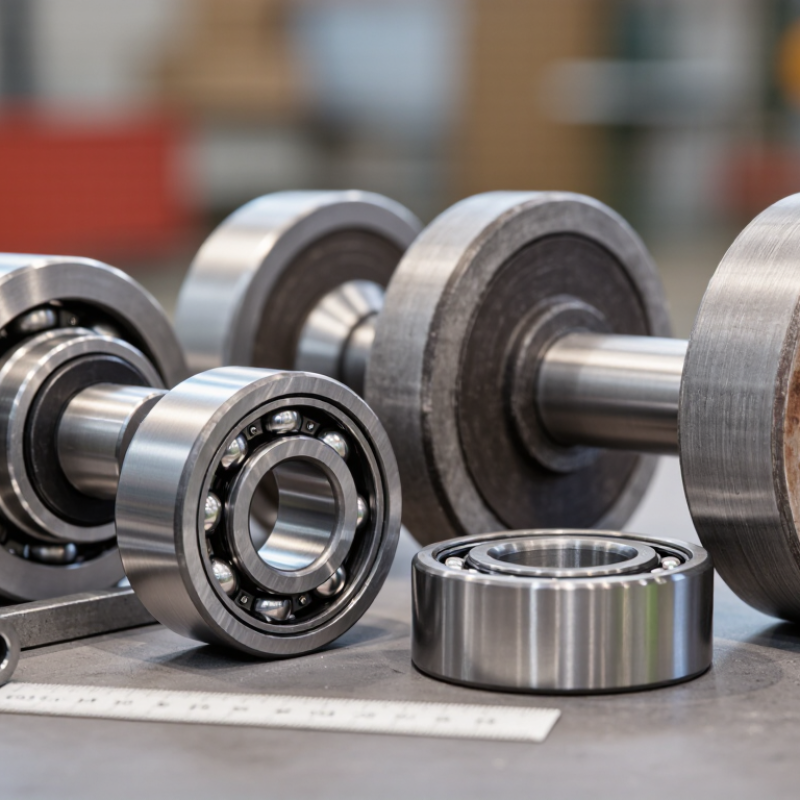
How to Choose the Right Bearing Wheel Roller?

Define Load, Speed, and Duty Requirements Before Selecting a Bearing Wheel Roller

How to Choose the Right Bearing Wheel Roller?

Define load, speed, and duty requirements before selecting a bearing wheel roller. Start with the total moving weight, including the frame, materials, and possible impact loads. Divide this weight across the rollers, but do not assume every roller carries an equal share. Uneven floors and poor alignment can shift extra force onto one wheel. A practical safety factor helps cover these conditions. Still, an oversized roller may increase cost and rolling resistance.

Speed also changes the selection. A roller moving slowly through a warehouse may need different bearings than one running continuously on a conveyor. Check rotational speed, travel distance, acceleration, and stopping frequency. Heat can build quickly when friction rises. Duty requirements matter just as much. Record operating hours, daily cycles, load changes, and idle periods. Intermittent service is not the same as nonstop operation. Not even close.

The working environment needs attention. Dust, moisture, cleaning chemicals, and temperature can affect seals, lubrication, and wheel materials. Measure the floor surface and inspect its joints or damage. I have seen a correctly rated roller fail early because the floor created repeated shock loads. That mistake is easy to miss. Confirm the mounting space, axle size, and required maintenance access before ordering. Then compare the calculated load with real operating conditions, preferably through a controlled trial. Calculations can be imperfect. Field evidence often reveals what the specification sheet cannot.

How to Choose the Right Bearing Wheel Roller?

Define load, speed, and duty requirements before selecting a bearing wheel roller.
Application Class Typical Load per Wheel Recommended Speed Duty Requirement Typical Wheel Diameter Suitable Tread Material Bearing Arrangement Typical Applications
Light-Duty Up to 250 kg Up to 1.0 m/s Intermittent use; short travel cycles 40–80 mm Nylon, acetal, or polyurethane Single deep-groove ball bearing Light conveyors, guides, drawers, small positioning systems
Medium-Duty 250–750 kg Up to 1.5 m/s Regular operation; moderate shock 60–125 mm Polyurethane, steel, or cast iron Sealed deep-groove ball bearing Material handling equipment, transfer tables, industrial carts
Heavy-Duty 750–2,500 kg Up to 1.0 m/s Continuous or frequent cycling; high static load 100–200 mm Forged steel, cast iron, or hardened steel Double-row ball bearing or tapered roller bearing Heavy conveyors, machine bases, pallet handling systems
High-Speed Up to 750 kg 1.5–3.0 m/s Frequent rotation; low vibration required 60–150 mm Balanced steel or precision polyurethane Precision sealed ball bearing; low-friction seals Automated conveyors, sorting lines, high-cycle transport equipment
Shock-Loaded 500–2,000 kg Up to 0.5 m/s Impact, uneven floors, or abrupt loading 100–250 mm Steel with toughened tread or cast iron Tapered roller bearing or reinforced double-row bearing Dock equipment, steel-mill handling, heavy-duty transfer systems
Corrosive or Washdown Up to 750 kg Up to 1.0 m/s Frequent cleaning, moisture, or chemical exposure 50–150 mm Stainless steel, engineered polymer, or corrosion-resistant coating Sealed stainless or corrosion-resistant bearing Food processing, pharmaceutical equipment, outdoor material handling
High-Temperature Up to 500 kg Up to 0.5 m/s Elevated operating temperature; reduced lubrication intervals 60–150 mm Heat-resistant steel or heat-stable engineering polymer High-temperature bearing with suitable grease or solid lubricant Ovens, kilns, thermal processing lines, hot-part handling
Selection checklist: Confirm the total system weight, number of load-bearing wheels, load distribution, shock factor, travel speed, operating temperature, floor condition, contamination level, duty cycle, and required service life. Do not divide the total load equally among all wheels unless the load distribution is verified; a practical design commonly assumes only three wheels carry the load on an uneven surface.
Note: The load and speed ranges are general engineering guidelines for preliminary selection. Actual capacity depends on wheel diameter and width, tread hardness, bearing dynamic and static ratings, axle strength, mounting design, floor conditions, shock loading, and required service life.

Match Dynamic Load Ratings and Safety Factors to the Applied Wheel Load

How to Choose the Right Bearing Wheel Roller?

Choosing a bearing wheel roller starts with the actual wheel load, not the cart’s empty weight. Add the payload, frame, tools, and any sudden impact during movement. Divide this total by the number of wheels, but do not assume every wheel carries an equal share. Uneven floors, turning, and small gaps can overload one wheel. In practical applications, I often use the dynamic load rating as the minimum requirement, then apply a suitable safety factor. A smooth indoor cart may need 1.5 times the calculated load. Shock loading, rough floors, or frequent starts may justify 2 to 3 times. Check the test conditions behind the rating. A laboratory figure may not reflect your floor.

Tips: Measure the heaviest real load. Include movement shocks. Review wheel spacing and alignment. If four wheels support 800 kilograms, avoid selecting four rollers rated at only 200 kilograms each. That leaves no reserve for uneven loading. A better target may be 300 kilograms or more per wheel, depending on operating conditions. Bearing resistance also matters. A roller that carries the load but requires excessive force can create unsafe handling and premature wear. Consider speed, duty cycles, temperature, and contamination before final selection. Small details matter.

My judgment may change after observing the equipment in service. Load estimates are sometimes too optimistic. Recheck them after a trial run, especially when wheels show flat spots, noise, or uneven contact. When conditions remain uncertain, verify calculations with published data and a qualified engineer.

Choose Bearing Type, Bore Size, and Sealing for Speed and Contamination Levels

How to Choose the Right Bearing Wheel Roller?

Choosing a bearing wheel roller starts with speed, load, and contamination levels. For frequent rotation, ball bearings usually reduce friction and heat. They suit smooth movement and moderate radial loads. Roller bearings can carry heavier loads, but they may resist motion more strongly. I learned this after selecting a heavy-duty option for a lightly loaded guide. It worked, but the wheel felt unnecessarily stiff.

Bore size must match the shaft closely. Measure the shaft at several points, not just once. A loose fit can create vibration, noise, and uneven wear. An overly tight fit may damage the bearing during assembly. Check the housing and spacer dimensions too. Small errors become obvious at high speed. Metric and inch dimensions should never be treated as interchangeable, even when they appear similar.

Sealing depends on what the wheel will face. Contact seals offer stronger protection against dust, water spray, and fine debris. They also create more friction. Non-contact shields support higher speeds, but they are less forgiving in dirty environments. In a clean indoor machine, a low-friction shield may be sensible. Near grit, washdown, or metal particles, stronger sealing usually protects service life. Temperature changes matter as well. Grease can stiffen in cold conditions or migrate when hot. Selection charts help, yet real operating conditions often expose assumptions. Inspect the first installed wheels early, then adjust the choice if heat, play, or noise appears.

Compare Wheel Material, Hardness, and Contact Stress for the Track Surface

How to Choose the Right Bearing Wheel Roller?

Compare Wheel Material, Hardness, and Contact Stress for the Track Surface

Choosing a bearing wheel roller starts with the track, not the wheel alone. Steel wheels suit heavy loads and clean steel rails. Polyurethane wheels reduce noise and protect finished floors, but they may deform under heat or concentrated loads. Cast iron offers good compressive strength, though it can damage a softer track. The wrong material creates flat spots, flaking, or visible rail dents.

Hardness must be compared on both surfaces. A very hard wheel is not automatically better. It can survive wear while cutting into a softer track. A softer wheel may protect the rail, but excessive compression can increase rolling resistance. Check the wheel diameter, load per wheel, speed, temperature, and track hardness together. Small details matter.

Contact stress deserves careful attention. Engineers commonly use Hertzian contact analysis to estimate pressure between the wheel and track. Larger wheels usually spread the load more effectively. Misalignment changes the contact patch and may create edge loading. In field inspections, I have seen acceptable calculations fail because the rail had rust pits or poor joints. That is an imperfect but important lesson. Measure the real track condition before final selection. Consider surface roughness, weld transitions, debris, and repeated impact loads. A wheel that works smoothly in a test bay may behave differently on an uneven rail.

Verify ISO 281 Fatigue Life, Lubrication Needs, and Operating Temperature Limits

How to Choose the Right Bearing Wheel Roller?

A bearing wheel roller must match both the load and the working environment. Begin with ISO 281 fatigue-life calculations, not visual size alone. The basic L10 life uses the dynamic load rating and equivalent bearing load. In simple terms, L10 = (C/P)^p million revolutions. It predicts when 90% of identical bearings may still operate. It is not a guarantee. Shock loads, misalignment, contamination, and poor installation can shorten life dramatically. Check radial and axial loads separately, especially on uneven floors or guide tracks.

Lubrication deserves equal attention. Too little grease creates heat and rapid wear. Too much grease can also raise temperature. Select a lubricant that suits the speed, load, moisture, and relubrication schedule. Temperature limits must include both ambient heat and frictional heat. Check the bearing, seal, grease, and wheel material as one system. A roller rated for 120°C may fail earlier if its seal softens at 90°C. I once underestimated start-stop cycles; the calculated life looked acceptable, but repeated acceleration caused noticeable brinelling. The calculation needed a more realistic load factor.

Tips: Record actual load, speed, duty cycle, and floor conditions. Inspect grease color and noise during routine checks. Leave room for thermal expansion. When conditions change, recalculate ISO 281 life instead of trusting the original selection. A conservative margin is wise, though excessive size can increase cost and rolling resistance. Temperature testing in the real installation is better than relying only on catalog limits.

How to Choose the Right Bearing Wheel Roller?

Verify ISO 281 fatigue life, lubrication needs, and operating temperature limits before selecting a bearing wheel roller.

ISO 281 fatigue life

For a roller bearing, the basic rating life is L10 = (C/P)10/3 million revolutions, where C is the basic dynamic load rating and P is the equivalent dynamic bearing load.

Lubrication requirement

Grease is commonly used for moderate speeds and sealed wheel assemblies. Oil lubrication is preferred when speed, heat removal, or continuous operation requires greater cooling capacity.

Operating temperature

A typical general-purpose grease may be specified around −20°C to 120°C. High-temperature greases can extend the range, but the lubricant, seals, cage, clearance, and bearing material must all be checked separately.

The chart uses the ISO 281 roller-bearing exponent p = 10/3 and shows calculated basic L10 life for different C/P load-rating ratios. Basic rating life does not by itself account for contamination, inadequate lubrication, mounting errors, shock loading, or temperature-related material and lubricant limits.

FAQS

What load should a bearing wheel roller support?

Calculate the total moving load, including payload, frame, tools, and movement shocks. Divide it across the wheels, but do not assume equal loading. Uneven floors can overload one wheel.

How much safety margin is appropriate?

Use the dynamic load rating as a minimum reference. A smooth indoor cart may need about 1.5 times the calculated load. Rough floors or shock loading may require 2 to 3 times more. The exact factor depends on real conditions.

Why is a simple equal-load calculation risky?

Four wheels carrying 800 kilograms do not always share 200 kilograms each. Turning, gaps, and poor alignment can shift weight to one wheel. Selecting a higher-rated roller provides useful reserve. The estimate may still be optimistic.

What else should be checked besides load capacity?

Check speed, duty cycles, temperature, contamination, and wheel alignment. A roller may carry the load but need excessive pushing force. That can cause unsafe handling and early wear. Small details matter.

Which bearing type suits frequent rotation?

Ball bearings usually reduce friction and heat during frequent rotation. They suit smooth movement and moderate radial loads. Roller bearings can carry heavier loads, but movement may feel stiffer. I once selected a heavy-duty type unnecessarily.

How should the bore size be selected?

Match the bore closely to the shaft diameter. Measure the shaft at several points, not just once. A loose fit can cause vibration, noise, and uneven wear. An overly tight fit may damage the bearing during assembly.

Can metric and inch dimensions be treated as interchangeable?

No. Similar-looking dimensions may still create a poor fit. Check the shaft, housing, and spacer measurements carefully. High-speed operation exposes small dimensional errors quickly.

What type of sealing is suitable for dusty environments?

Contact seals provide stronger protection against dust, water spray, and fine debris. They also create more friction. Non-contact shields support higher speeds but tolerate dirt less effectively. Near grit or metal particles, stronger sealing may extend service life.

How do temperature changes affect bearing selection?

Cold conditions can make grease stiff. High temperatures may cause grease to migrate. Review the operating temperature before choosing lubrication and seals. Charts help, but real equipment can disagree.

When should the installed rollers be inspected?

Inspect them early after installation and after a trial run. Watch for flat spots, noise, heat, looseness, or uneven contact. My judgment may change after observing actual service. When uncertainty remains, verify the calculation with published data and a qualified engineer.

Conclusion

Choosing the right Bearing Wheel Roller begins with a clear understanding of the application. Define the expected load, travel speed, operating cycle, impact conditions, and environmental exposure before comparing products. The selected roller should have a dynamic load rating that comfortably exceeds the applied wheel load, with an appropriate safety factor for shock, uneven tracks, and continuous operation. Bearing type and bore size must match the required speed, shaft arrangement, and mounting method, while effective sealing is essential in dusty, wet, or contaminated environments.

The wheel material and hardness should also suit the track surface to control contact stress, wear, noise, and the risk of deformation. Finally, verify the estimated fatigue life using ISO 281 principles, then confirm lubrication intervals and operating temperature limits. A complete evaluation of load capacity, speed, sealing, wheel-track compatibility, maintenance, and service conditions will help ensure reliable performance and a longer working life.


Sophia

Sophia

Sophia is a dedicated marketing professional with an exceptional depth of knowledge about her company's products and services. With a keen understanding of market trends and customer needs, she crafts insightful blog posts that not only inform but also engage readers, enriching the company’s online......