What Is a Double Row Tapered Roller Bearing?

Time:2026-10-14 Author:Mason
0%

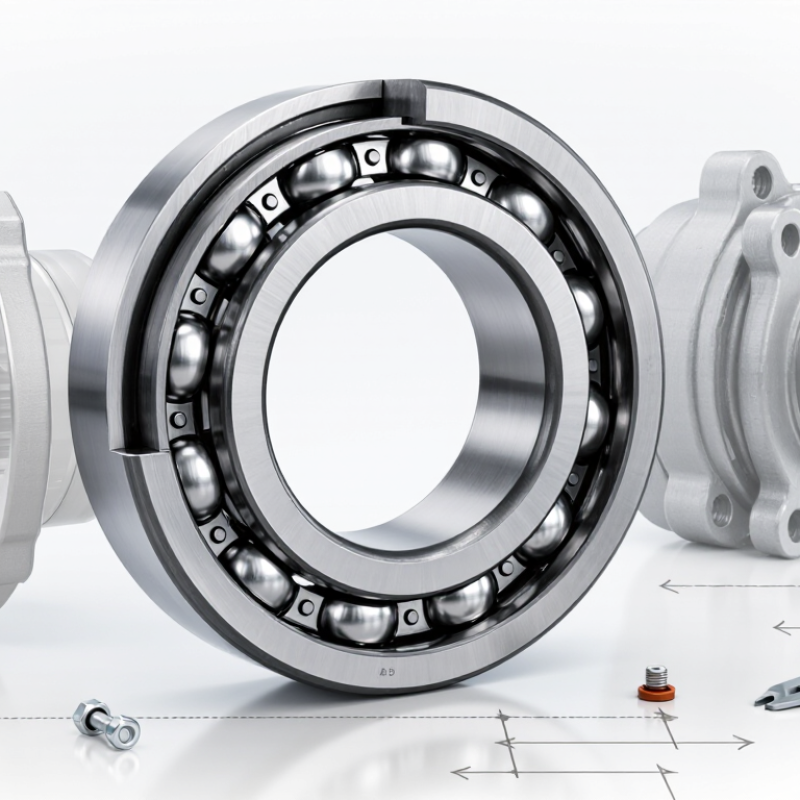
A Double Row Tapered Roller Bearing combines two tapered roller rows within one compact assembly. Its geometry supports radial loads and substantial axial loads in both directions. The rollers meet the raceways along angled contact lines, spreading force across a larger area. This design appears in vehicle hubs, gearboxes, mining conveyors, and heavy industrial drives.

Its value is practical. One bearing can replace two single-row arrangements, reducing housing width, alignment work, and potential assembly errors. However, compactness does not guarantee longer service life. Load distribution, preload, lubrication, contamination, shaft stiffness, and installation accuracy still determine performance. Small errors matter. A damaged seal can quickly turn clean grease into abrasive paste.

Grand View Research estimates the global bearings market reached approximately USD 132 billion in 2023, with continued growth expected through 2030. SKF’s 2024 Annual Report also highlights sustained demand from automotive, industrial, and energy applications. These reports describe broad bearing markets, not this specific configuration, so their figures require careful interpretation.

Tedric A. Harris, a leading rolling-bearing analyst, wrote, “Bearing life is defined as the number of revolutions which a bearing runs before the first evidence of fatigue develops.” His definition reflects the engineering discipline behind selecting a Double Row Tapered Roller Bearing. In practice, fatigue calculations based on ISO 281 provide guidance, not certainty. Real machines are less predictable than spreadsheets. Temperature changes, mounting damage, and neglected relubrication can undermine excellent calculations. A reliable introduction must therefore explain both the bearing’s load-carrying advantages and its operating limitations.
What Is a Double Row Tapered Roller Bearing?

Definition and Basic Structure of a Double-Row Tapered Roller Bearing

What Is a Double Row Tapered Roller Bearing?

Definition and Basic Structure of a Double-Row Tapered Roller Bearing

A double-row tapered roller bearing contains two rows of tapered rollers, two inner rings, and one shared outer ring. Each roller has a larger and smaller end. This geometry guides the rollers toward a common apex. The bearing can carry radial loads and substantial axial loads in both directions. Its paired rows also improve stiffness under combined loading.

The structure is not simply “two bearings joined together.” The internal distance between the rows controls load distribution and moment capacity. According to ISO 281:2007, basic rating life uses L10 = (C/P)p. For roller bearings, p equals 10/3. L10 represents the life that 90% of identical bearings can reach under defined conditions. In practice, lubrication, contamination, mounting accuracy, and misalignment can change results sharply. The U.S. Department of Energy’s 2022 Motor Systems Market Assessment reports that motor-driven systems use about 69% of industrial electricity in the United States. Efficient bearing selection therefore affects more than one component.

Tips: Check the bearing’s load direction before installation. Measure shaft and housing fits. Keep sealing surfaces clean. A small mounting error can create uneven contact marks across one roller row. I have seen catalog calculations look correct, yet field temperatures remained high because preload was misunderstood. That detail deserves more attention. Temperature, vibration, and lubricant condition should be recorded during commissioning and later inspections.

How Double-Row Tapered Roller Bearings Operate

What Is a Double Row Tapered Roller Bearing?

How Double-Row Tapered Roller Bearings Operate

A double-row tapered roller bearing uses two rows of tapered rollers inside matching raceways. Each roller has a cone-shaped profile. This geometry lets the bearing carry radial loads and axial loads at the same time. The two rows usually face opposite directions, so the bearing can manage thrust from both sides.

As the shaft rotates, the rollers travel between the inner raceways and outer raceway surfaces. Their large contact area spreads the load across several rollers. This reduces stress at each contact point. The tapered design also creates a small axial force during rotation. Correct internal clearance or preload keeps the rollers guided without excessive friction.

Lubrication matters greatly. Clean grease or oil forms a thin film between the rolling surfaces. Too little lubricant can raise temperature quickly. Too much may also create heat through churning. In workshop inspections, unusual noise, uneven wear, or rising housing temperature often signals a problem. However, temperature alone can mislead. Load, speed, alignment, and ambient conditions must be checked together.

A practical mistake is treating both rows as perfectly independent. They share housing stiffness and operating conditions. Poor shaft alignment can concentrate load on one row. That imbalance may shorten service life, even when the bearing appears correctly installed. Careful mounting, measured clearance, and regular condition checks provide more reliable operation.

What Is a Double-Row Tapered Roller Bearing?

How Double-Row Tapered Roller Bearings Operate

A double-row tapered roller bearing uses two opposing rows of tapered rollers. Each row supports radial load and generates an axial force component. Because the rows face opposite directions, the bearing can accommodate axial loads in both directions while also improving resistance to overturning moments.

The chart shows the geometric axial-force component, calculated as tan(contact angle). The values are normalized ratios rather than manufacturer load ratings; actual bearing capacity also depends on roller size, number of rollers, materials, lubrication, clearance, and operating speed.

Load Capacity and Performance Characteristics

A double row tapered roller bearing uses two angled roller-and-raceway sets in one assembly. The arrangement supports radial loads and axial loads from both directions. It also controls shaft position more effectively than a single-row design.

In field inspections, the load path is visible: rollers transfer force through narrow, polished contact zones.

Load capacity depends on geometry, roller count, contact angle, and internal clearance. ISO 281:2007 defines the basic rating life, L10, as the life reached by 90% of identical bearings under stated conditions.

For roller bearings, the calculation follows L10 = (C/P)10/3, where C is dynamic load rating and P is equivalent load.

A small increase in applied load can therefore reduce calculated life sharply. This relationship is often underestimated.

Double-row construction can improve stiffness and load distribution, but capacity is not simply twice that of one row. Unequal loading, shaft deflection, contamination, and installation errors change the result.

ISO 76:2006 addresses static load ratings, which help assess permanent deformation during shock or stationary loading.

In a practical test, excessive preload may raise temperature near the seal and raceway shoulder. Too little preload can create vibration and roller skew.

The uncomfortable detail is that catalogue capacity rarely matches poor alignment. Calculations need operating temperature, lubrication viscosity, speed, and actual mounting conditions.

Common Designs, Materials, and Sealing Options

What Is a Double Row Tapered Roller Bearing?

Common Designs, Materials, and Sealing Options

A double row tapered roller bearing uses two roller rows to support radial and axial loads in both directions. Its geometry resembles two single-row bearings arranged together. Common TDO designs use one double-width outer ring and two inner rings. TDI designs reverse this arrangement. Spacer width controls internal clearance and preload. That detail matters during installation.

Through-hardened chromium steel remains common for general industrial service. Carburized steel suits heavy shock loads because its tough core resists cracking. Stainless steel helps in humid environments, but it usually sacrifices some load capacity. Ceramic rollers can reduce mass and friction. They also increase cost. The choice is rarely perfect.

Sealing changes performance noticeably. Open bearings work well with clean oil-bath lubrication and require external protection. Non-contact shields create less friction, but they provide limited defense against dust. Contact seals block contamination more effectively and retain grease. They can, however, raise operating temperature at high speed. ISO 281:2007 defines basic rating life L10 as the life reached by 90% of identical bearings under stated conditions. That figure is useful, not a guarantee. ISO 15243 also shows that many failures involve contamination, poor lubrication, or incorrect mounting. In practice, a clean shaft, correct preload, and measured alignment often matter more than selecting an oversized bearing.

Selection, Installation, and Maintenance Considerations

A double row tapered roller bearing combines two opposed rows of tapered rollers in one assembly. It supports radial loads and axial loads in both directions. Selection starts with load, speed, space, and stiffness. Calculate equivalent dynamic load, then check ISO 281:2007 rating life. Its basic rating life represents 90% reliability, not guaranteed service time. That distinction matters.

Choose an internal clearance that matches shaft fits, operating temperature, and housing rigidity. Excessive preload creates heat, while loose adjustment can produce vibration and roller skewing. ISO 15243 damage classifications help identify fatigue, smearing, brinelling, and contamination. In practice, a clean drawing and accurate load history are more valuable than guessing from catalog tables. I have seen installations fail because nominal load data ignored shock loads.

Installation needs controlled force. Press the ring with the interference fit, never transmit force through the rollers. Clean the shaft shoulder, inspect chamfers, and measure runout before assembly. Use calibrated torque or displacement equipment when setting preload. After installation, rotate the shaft by hand and record starting torque. A small error here can become a large temperature rise.

Maintenance should track temperature, vibration, noise, lubricant condition, and seal integrity. Use the lubricant quantity specified for the application, and prevent mixed grease types. The U.S. Department of Energy’s Operations & Maintenance Best Practices Guide reports typical maintenance programs can reduce energy use by 5–20%. Bearing savings vary. That estimate is not a promise. Recheck alignment after thermal cycling, because the first inspection may expose problems missed during assembly.

What Is a Double Row Tapered Roller Bearing? - Selection, Installation, and Maintenance Considerations

Data Dimension Technical Information Selection Considerations Installation Requirements Maintenance Considerations
Bearing Definition A double row tapered roller bearing contains two rows of tapered rollers arranged to support loads in both axial directions and in the radial direction. Confirm that the bearing arrangement matches the required load directions and available mounting space. Install the bearing as a matched assembly when the inner rings, outer ring, spacers, or adjustment components are supplied as a set. Monitor the complete assembly rather than evaluating only one roller row.
Load Capacity Tapered rollers provide a large contact area, giving the bearing high radial-load capacity and substantial axial-load capacity compared with many single-row arrangements of similar size. Use the manufacturer’s dynamic and static load ratings for life calculations. Check both radial and axial loads, including shock loads. Prevent impact loading during mounting. Press only on the ring being fitted to avoid transmitting force through the rollers. Investigate abnormal temperature, vibration, or noise, which may indicate overload, misalignment, or inadequate lubrication.
Axial Load Direction The two tapered rows can accommodate axial loads in opposite directions, making the bearing suitable for applications requiring bidirectional thrust support. Verify the direction, magnitude, and frequency of axial loads. Consider whether a locating and floating bearing arrangement is needed. Set the required internal clearance or preload according to the application design and bearing instructions. Check for endplay changes, brinelling, or raceway damage caused by excessive thrust or incorrect adjustment.
Common Applications Typical applications include gearboxes, wheel hubs, reduction drives, industrial rollers, heavy-duty shafts, and machinery exposed to combined loads. Evaluate speed, load spectrum, shock, contamination, operating temperature, sealing, and available lubrication before choosing the bearing. Clean the shaft, housing, tools, and work area. Keep the bearing wrapped until installation to limit contamination and corrosion. Establish inspection intervals based on operating severity, load, speed, temperature, and contamination level.
Basic Load Calculation For combined loading, the equivalent dynamic bearing load is commonly expressed as P = XFr + YFa, where Fr is radial load, Fa is axial load, and X and Y are application factors. Use the applicable X and Y factors from the bearing specification because they vary with bearing geometry and load conditions. Confirm that the selected bearing can withstand the calculated dynamic load and the required static safety factor. Recalculate load conditions if the machine duty cycle, speed, torque, or operating direction changes.
Bearing Life For roller bearings, the basic rating life is commonly calculated as L10 = (C/P)10/3, expressed in millions of revolutions, where C is the dynamic load rating and P is the equivalent dynamic load. Use an adjusted life method when reliability, lubrication, contamination, material, or operating conditions differ significantly from the reference conditions. Prevent mounting damage because dents or raceway marks can substantially reduce calculated service life. Compare actual service life with the calculated target and use findings from failed bearings to improve future selections.
Speed Capability Double row tapered roller bearings generally generate more friction and heat than many lighter bearing types because of their contact geometry and axial-load capability. Check the reference speed, limiting speed, heat generation, and lubrication method. Reduce permissible speed when load or temperature is high. Use the specified lubricant quantity and ensure that seals, spacers, and adjustment components do not create excessive drag. Track operating temperature and investigate a sustained rise above the established baseline.
Internal Clearance and Preload Internal clearance is the movement available before operation; preload is an intentional negative clearance that increases stiffness but also increases friction and heat. Select clearance or preload according to shaft expansion, housing fit, stiffness, load, speed, and temperature conditions. Measure endplay or torque using the specified adjustment procedure. Do not tighten by feel alone. Check for signs of excessive preload, such as overheating, high running torque, discoloration, or lubricant breakdown.
Shaft and Housing Fits Fits control ring creep, load distribution, mounting stress, and the ability of the assembly to accommodate thermal expansion. Choose shaft and housing tolerances according to load direction, rotating ring conditions, load magnitude, temperature, and adjustment requirements. Inspect journals and seats for burrs, damage, out-of-roundness, and incorrect dimensions. Measure critical surfaces before assembly. Look for fretting corrosion, polished seating surfaces, looseness, or circumferential wear that may indicate an unsuitable fit.
Mounting Method Mechanical or hydraulic mounting methods may be used, depending on bearing size, fit interference, and available equipment. Use a properly sized press, mounting sleeve, or hydraulic equipment. Never use a hammer directly on a bearing ring. Apply force only to the ring with the interference fit. Keep rollers and raceways free from impact and excessive force. Record the mounting method, adjustment value, and initial running condition for future troubleshooting.
Lubrication Type Grease is common for moderate speeds and simplified maintenance; oil is preferred when heat removal, high speed, or continuous circulation is required. Select lubricant viscosity and consistency for load, speed, temperature, contamination, and relubrication requirements. Use clean lubricant and avoid mixing incompatible grease types or base oils unless compatibility has been verified. Relubricate according to calculated intervals and operating conditions, not simply by calendar time.
Grease Quantity Over-greasing can cause churning and overheating, while under-greasing can produce metal-to-metal contact and accelerated wear. Follow the bearing or equipment lubrication specification. The correct quantity depends on free space, speed, sealing, and operating temperature. Distribute grease carefully and keep dirt, fibers, and moisture away from the bearing during assembly. During relubrication, provide a safe outlet for excess grease where the housing design permits it.
Contamination Control Dust, water, metal particles, and process debris can damage raceways and rollers, degrade lubricant, and shorten bearing life. Consider seals, shields, housing protection, lubricant cleanliness, and environmental exposure during selection. Clean components with a suitable lint-free material and use clean tools. Do not rotate a contaminated dry bearing unnecessarily. Inspect seals and lubricant condition. Replace damaged seals and correct the source of contamination rather than only changing grease.
Alignment Misalignment causes uneven load distribution across the rollers and can increase edge stress, heat, and noise. Check shaft and housing rigidity, machining accuracy, deflection, and whether the design permits angular misalignment. Align the shaft and housing accurately. Do not force the bearing into position by tightening mounting components against misaligned parts. Monitor vibration patterns, raceway wear marks, and temperature differences that may reveal alignment problems.
Thermal Expansion Temperature changes can alter internal clearance, shaft fits, lubricant viscosity, and bearing preload. Account for shaft and housing expansion, operating temperature, speed, and the distance between bearing positions. Verify that the adjustment remains within specification after the assembly reaches its operating temperature. Trend temperature during start-up and steady operation, especially after seasonal or process changes.
Condition Monitoring Useful indicators include vibration, temperature, noise, torque, lubricant condition, and changes in endplay. Establish baseline values during normal operation and define alarm limits appropriate to the machine. Confirm that sensors do not interfere with seals, housings, or lubrication paths. Use trend data to schedule inspection before severe damage or unplanned downtime occurs.
Inspection and Replacement Replace the bearing when raceways or rollers show spalling, scoring, cracks, heavy wear, corrosion, overheating discoloration, or unacceptable looseness. Investigate the failure mode before selecting a replacement; a direct replacement may fail again if the root cause remains. Replace related damaged components, seals, spacers, and contaminated lubricant as required. Document damage patterns, lubricant condition, operating history, and corrective actions.
Storage and Handling Bearings should remain in clean, dry, vibration-free storage at stable temperature and humidity conditions. Use stock rotation and preserve original packaging until the bearing is needed. Handle with clean, dry hands or suitable gloves. Never place the bearing directly on a dirty workbench. Inspect packaging and bearing surfaces for corrosion or damage before use; do not install a compromised bearing.
Safety Practices Improper mounting, lifting, adjustment, or lubricant handling can cause injury and equipment damage. Select tools and lifting equipment rated for the bearing and assembly weight. Wear appropriate eye and hand protection, secure the workpiece, and follow the equipment’s documented procedure. Isolate power before inspection and allow hot components to cool before servicing.
Note: Exact load ratings, speed limits, fits, adjustment values, lubrication intervals, and allowable operating temperatures depend on the specific bearing geometry and application. Always verify these values against the applicable technical specification and machine design.

FAQS

What is a double-row tapered roller bearing?

It contains two tapered roller rows, two inner rings, and one shared outer ring. Each roller has large and small ends. The rollers guide toward a common apex. This design supports radial and axial loads.

What loads can this bearing handle?

It handles radial loads and axial loads in both directions. The opposed rows manage thrust from opposite sides. The paired structure also improves stiffness under combined loading. It is not simply two separate bearings joined together.

How does the bearing distribute operating loads?

Several rollers share contact with the raceways. This spreads the load across larger surfaces. Stress at each contact point can decrease. Poor alignment may still overload one row.

How should I choose the correct bearing?

Check load, speed, available space, stiffness, and operating temperature. Calculate the equivalent dynamic load before checking service life. Consider shock loads, not only normal operating loads. Catalog tables can mislead.

How do clearance and preload affect performance?

Excessive preload can create friction and rapid temperature rise. Loose adjustment may cause vibration and roller skewing. Choose clearance according to shaft fits and housing rigidity. The correct setting is not always obvious.

What installation practices are important?

Apply force through the ring with the interference fit. Never transmit installation force through the rollers. Clean the shaft shoulder and inspect the chamfers. Measure runout before assembly. Small errors matter.

How should lubrication be managed?

Use clean grease or oil that suits the application. Too little lubricant can raise temperature quickly. Too much lubricant may create heat through churning. Do not mix incompatible grease types. Lubricant quantity deserves careful checking.

What should be checked after installation?

Rotate the shaft by hand and record the starting torque. Monitor temperature, vibration, noise, lubricant condition, and seal integrity. Uneven wear or unusual noise may indicate trouble. Temperature alone can mislead. Check the surrounding conditions too.

How is bearing life estimated?

Basic rating life uses the relationship L10 = (C/P)^(10/3) for roller bearings. It describes the life reached by 90% of identical bearings under defined conditions. It is not a guaranteed service period. Lubrication, contamination, mounting, and misalignment can change results sharply. Reality is less tidy.

Conclusion

A Double Row Tapered Roller Bearing is a rolling-element bearing designed with two rows of tapered rollers and raceways arranged to support combined radial and axial loads. Its paired-row structure provides greater load capacity, improved stability, and better resistance to tilting than many single-row designs. As the rollers move between the inner and outer raceways, their tapered geometry distributes forces efficiently while maintaining smooth rotation under demanding operating conditions.

These bearings are available in different internal arrangements, materials, and sealing options to suit speed, temperature, contamination, and load requirements. Proper selection should consider load direction, operating speed, available space, lubrication, and expected service life. Accurate installation is essential because misalignment, excessive mounting force, or incorrect clearance can cause premature wear. Regular inspection, suitable lubrication, contamination control, and timely replacement of damaged components help maintain reliable performance and extend the bearing’s operating life.


Mason

Mason

Mason is a seasoned marketing professional with a deep expertise in the company's offerings and a passion for driving brand awareness. With a strong background in digital marketing strategies, he has an innate ability to connect with diverse audiences and effectively communicate product benefits.......