Choosing the right Auto Bearing manufacturer affects vehicle safety, operating efficiency, maintenance costs, and supply continuity. Global buyers now evaluate more than price. They examine load ratings, sealing performance, noise control, traceability, testing capacity, and regional support.
Fortune Business Insights valued the global automotive bearing market at approximately USD 40.64 billion in 2023. Its report projects continued growth through 2032, supported by vehicle production, electrification, and demand for durable components. The report also highlights changing technical requirements. Electric vehicles can create different speed, vibration, and lubrication challenges. Therefore, a familiar supplier may not always be the best supplier.
SKF founder Sven Wingquist reportedly described the bearing as “the heart of the machine.” The statement remains relevant. A small bearing failure can immobilize a large vehicle. That reality makes manufacturer selection a technical decision, not merely a purchasing exercise.
This guide reviews ten leading Auto Bearing manufacturers serving international buyers. It considers engineering experience, production scale, quality systems, aftermarket reach, and application knowledge. Sources include Fortune Business Insights, company annual reports, technical catalogues, and industry documentation. However, rankings are never perfectly objective. A manufacturer strong in wheel bearings may be less suitable for transmission or electric-motor applications. Buyer needs differ.
The shortlist therefore should support comparison, not replace due diligence. Check certificates, test records, warranty terms, counterfeit protection, and delivery performance before signing a contract. A polished catalogue is not enough. Real-world reliability is measured under heat, dust, vibration, and long service hours.
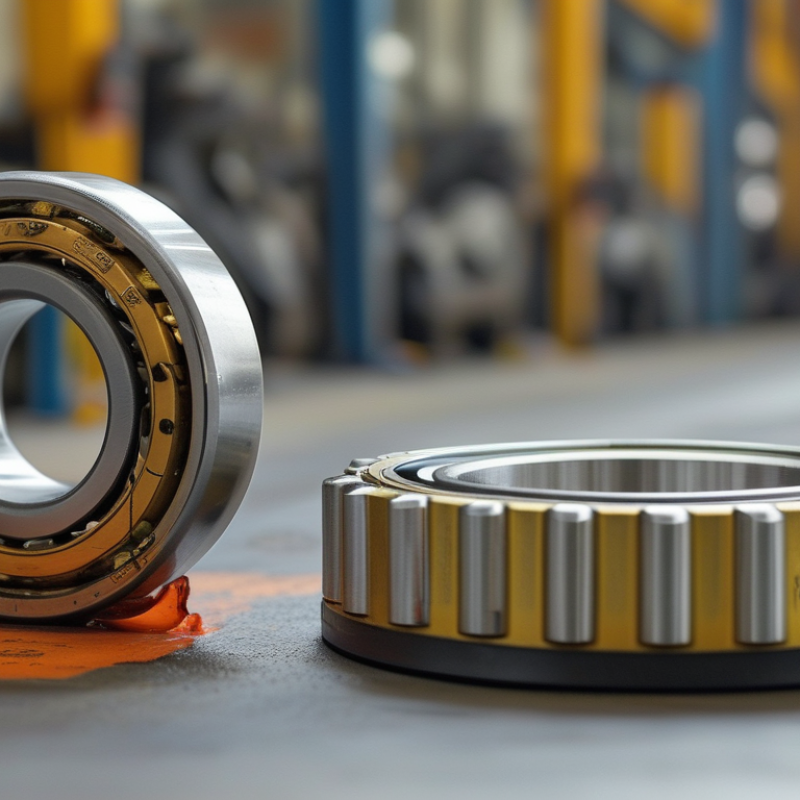
Auto bearings are precision components that support rotating shafts and reduce friction between moving parts. In a passenger vehicle, they help wheels, transmissions, alternators, and other systems rotate smoothly. A typical bearing contains inner and outer rings, rolling elements, a cage, lubricant, and protective seals. Each part must work under heat, vibration, dirt, and changing loads.
Small parts. Large consequences. A bearing may look clean during inspection yet fail early because of poor heat treatment, incorrect clearance, or weak sealing. I have seen installation damage mistaken for a manufacturing defect. This is why buyers should examine more than unit price. The manufacturer’s material controls, dimensional testing, load data, and batch traceability deserve close attention. Clear technical documents also make troubleshooting faster.
Manufacturer choice matters because vehicles operate in different environments. A wheel bearing may face water, road salt, impact, and continuous rotation. A transmission bearing needs stable performance under high temperature and changing torque. Reliable producers validate designs through endurance tests and control production consistency. They should explain tolerance grades, lubricant compatibility, sealing performance, and inspection methods in practical language. Be cautious when claims sound perfect. Real engineering includes limits, test conditions, and occasional failures that lead to better corrections. Reliable supply, protective packaging, and responsive technical support also reduce avoidable delays for global buyers.
Global motor vehicle production provides a useful demand indicator for automotive bearings used in wheel hubs, transmissions, engines, electric motors, and auxiliary systems. The figures below represent worldwide motor vehicle production, not bearing sales or any individual manufacturer’s output.
Key insight: Global vehicle production declined sharply in 2020, then recovered through 2023. For global buyers, manufacturer selection should consider consistent quality, dimensional accuracy, sealing performance, load capacity, traceability, and dependable supply continuity.
Evaluating the top 10 auto bearing manufacturers requires more than comparing annual output or export figures. Global buyers need evidence from real vehicle applications, not polished claims. I examine bearing performance under heat, vibration, contamination, and repeated load cycles. A bearing that survives laboratory testing may still fail on a dusty commercial route.
Technical judgment starts with material consistency, heat treatment, raceway accuracy, seal design, and lubrication control. I look for traceable inspection records, calibrated equipment, and documented process changes. Independent certifications help, but certificates alone cannot prove field reliability. Sample testing should include noise, rotational torque, fatigue life, and dimensional stability. Small deviations matter. Test methods should match the vehicle type, climate, speed range, and maintenance schedule.
Reliability also depends on delivery discipline, engineering support, warranty handling, and clear communication. A capable supplier explains failure analysis without hiding inconvenient results. That behavior signals maturity. Price deserves attention, yet the cheapest unit can create higher downtime and replacement costs. I would question rankings based only on revenue or factory size. These measures may overlook smaller, highly controlled operations. Evaluation is never perfectly neutral. Buyer data may be incomplete, and test conditions may favor one design. A strong review records its assumptions, repeats critical tests, and compares results with actual operating evidence.
The top 10 auto bearing manufacturers worldwide differ more by engineering focus than factory size. One profile specializes in wheel hub units. Another develops tapered roller bearings for heavy vehicles. Others focus on needle bearings, high-speed electric motor bearings, or low-friction designs. Several combine steel production, heat treatment, sealing, and testing under one roof. This improves traceability during large automotive programs.
The International Energy Agency reported nearly 14 million electric cars were sold globally in 2023. They represented about 18% of new car sales. This shift changes bearing requirements. Manufacturers now develop quieter products, improved electrical insulation, and seals for higher rotational speeds.
The ten leading profiles also include suppliers serving transmissions, steering systems, commercial vehicles, and aftermarket distribution. Fortune Business Insights estimates continued automotive bearing market growth through 2032, but forecasts vary by scope. That difference deserves attention.
Tips: Compare load ratings, not only catalogue prices. Request fatigue-life data, salt-spray results, and temperature limits. Check whether testing follows ISO 281 or another recognized method. Ask for lot-level traceability and audit records. A supplier with local inventory may reduce downtime. However, “global coverage” can hide uneven service quality. I have seen technically strong samples fail during installation because fit, lubrication, or storage was overlooked. Buyer reviews should therefore include plant audits and field evidence. The best choice is rarely the cheapest bearing. It is the one matching the vehicle’s real duty cycle.
Comparing Product Range, Quality, Technology, and Global Reach
A useful comparison starts with product coverage, not advertising claims. The strongest manufacturers usually offer wheel hub bearings, tapered roller bearings, deep-groove bearings, and specialized automotive units. Buyers should check dimensions, load ratings, sealing options, and compatibility data. A wide catalog is helpful. It can also hide weak specialization.
Quality depends on repeatable production. Look for documented heat treatment, controlled steel sourcing, automated inspection, and traceable batch records. In supplier audits, I would examine surface finish reports and noise-testing procedures. Small variations can create noticeable vibration after installation. Independent testing adds confidence, although even certified factories can experience occasional failures.
Quality depends on repeatable production. Look for documented heat treatment, controlled steel sourcing, automated inspection, and traceable batch records.
Technology separates established producers from ordinary suppliers. Useful signs include sensor-integrated bearings, low-friction seals, digital measurement systems, and predictive maintenance support. Yet advanced features should solve a real operating problem. Otherwise, they increase cost without improving service life. Global reach also requires regional warehouses, stable export documentation, technical support, and clear warranty handling. Delivery promises need evidence from actual stock levels and shipping records. No ranking is perfect. Market data changes, and product performance may vary between factories or production batches. Buyers should request samples, compare test results, and review field feedback before approving large orders. Attention to these details often matters more than a polished corporate presentation.
A top-ten list is only a starting point. Global buyers should match each auto bearing supplier to the vehicle’s real operating conditions. Check load, speed, temperature, contamination, and available installation space. A bearing for a wheel hub faces different stresses from one used in an electric motor. The IEA reported over 17 million electric cars sold worldwide in 2024. This shift increases demand for low-noise, high-speed, and electrically insulated bearing designs. Ask suppliers for tested performance data, not attractive catalog language.
Quality evidence should include ISO 281 life calculations, ISO 15243 failure analysis, and documented dimensional controls. Certification to IATF 16949 can indicate a mature automotive quality system, but certification alone proves little. Review audit results, process capability records, material certificates, and sample inspection reports. Grand View Research estimates continued growth in the global automotive bearing market through 2030, making capacity verification important. Can the supplier maintain tolerances during peak orders? Request production lead times, minimum order quantities, warranty terms, and corrective-action records. Small details matter.
Visit the factory when possible. Observe heat treatment, grinding, cleanliness controls, and final inspection. Request traceability from steel batch to shipping carton. Supplier history also deserves careful checking. A long operating record is useful, yet old habits may hide weak digital controls. I have seen purchasing teams compare price first and investigate failure costs later. That approach is rarely efficient. Pilot orders, independent testing, and clear acceptance criteria reduce that risk. Supplier selection should remain evidence-based, even when deadlines feel urgent.
Compare load ratings, speed limits, temperature ranges, sealing, and expected fatigue life. Catalogue price alone can mislead.
Electric vehicles demand quieter bearings, higher rotational speeds, and better electrical insulation. Small noise differences matter inside a quiet cabin.
Review load, speed, heat, contamination, and installation space. A wheel hub and an electric motor face very different stresses.
Request life calculations, failure analysis, dimensional records, material certificates, and inspection reports. Attractive catalogue language is not enough.
Traceability links the steel batch, production records, inspection results, and shipping carton. It can simplify investigations after a field failure.
Visit when possible. Observe heat treatment, grinding, cleanliness controls, sealing, and final inspection. A polished tour may still hide weak controls.
Confirm fit, lubrication, storage conditions, and installation procedures before ordering. Technically strong samples can still fail during careless installation.
Not usually. Compare downtime, warranty support, fatigue life, and field performance. I may overvalue price under deadline pressure, and that can become expensive.
Certification suggests a structured quality system, but it proves little alone. Review audit results, process capability, corrective actions, and sample evidence.
Use pilot orders, independent testing, clear acceptance criteria, and factory audits. No checklist is magic, but evidence is better than urgency.
Choosing the right Auto Bearing manufacturer is essential for vehicle safety, efficiency, durability, and long-term maintenance costs. This article explains what auto bearings do, including supporting rotating components, reducing friction, and handling demanding loads under changing road and operating conditions. It also outlines how leading manufacturers can be evaluated through product quality, engineering capability, manufacturing consistency, testing standards, innovation, customization options, delivery reliability, and international service coverage.
The overview compares ten major global manufacturers by their product ranges, technical strengths, quality control systems, research investment, and ability to serve buyers in different markets. It also provides practical guidance for selecting a suitable supplier based on vehicle application, operating environment, required specifications, order volume, certification expectations, total cost, and after-sales support. By considering both performance and supply-chain reliability, global buyers can make more informed decisions and build dependable, long-term sourcing partnerships.

Jito Bearing