Choosing reliable bearing roller manufacturers in China requires more than comparing factory prices. Global buyers must examine engineering capability, production controls, quality evidence, and long-term communication. A strong Bearing Roller supplier should understand load ratings, surface hardness, dimensional tolerance, and application-specific fatigue requirements. These details affect performance inside automotive, industrial, agricultural, and heavy-duty equipment.
This guide examines leading Chinese manufacturers from a buyer’s practical perspective. It considers manufacturing experience, material selection, heat-treatment methods, grinding accuracy, inspection equipment, and export support. Factory audits, sample testing, and traceability records can reveal differences that product photographs cannot show. Ask for inspection reports. Verify them carefully. A polished website is not technical proof.
Some manufacturers specialize in high-volume standard rollers, while others handle customized dimensions and demanding operating environments. Their strengths may differ. That is not always easy to judge remotely. Buyers should compare tolerance data, batch consistency, packaging quality, lead times, and responses to technical questions. Clear drawings and realistic specifications also prevent costly misunderstandings.
The manufacturers discussed here are evaluated through practical sourcing considerations, not promotional claims alone. Independent testing remains valuable when reliability is critical. Even experienced buyers can overlook small issues, such as packaging moisture or inconsistent labeling. Careful verification helps reduce those risks. It also supports safer purchasing decisions and more dependable global supply relationships.
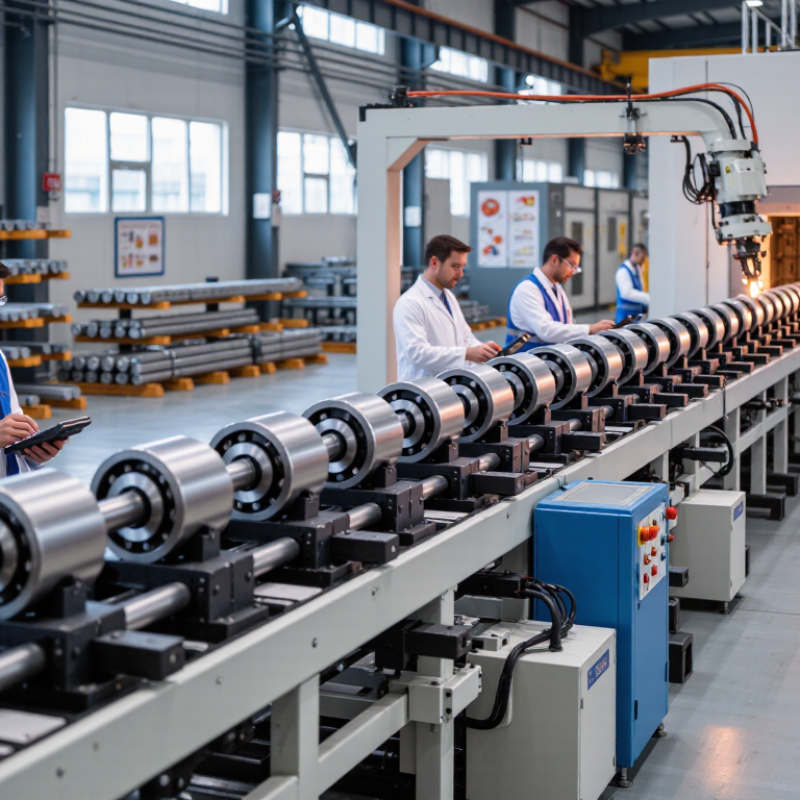
Chinese bearing manufacturers produce several roller types for machinery with very different load and space requirements. Cylindrical rollers handle substantial radial loads and suit gearboxes and electric motors. Tapered rollers combine radial and axial support, making them common in vehicle hubs. Spherical rollers can accommodate some shaft misalignment under heavy loads. Needle rollers are slimmer, useful where housing space is tight. Small parts. Big consequences.
Material and geometry matter as much as type. Buyers may compare steel grade, heat treatment, surface finish, roller profile, and dimensional tolerance. A rough surface or inconsistent diameter can affect noise, heat, and service life. The ISO 281 bearing-life standard provides a calculation framework, but actual performance also depends on lubrication, alignment, and operating conditions. Specifications deserve close review.
Grand View Research’s Bearing Market Size report estimated the global bearing market at USD 126.7 billion in 2023 and projected an 8.5% compound annual growth rate from 2024 to 2030. That figure describes the broader market, not Chinese roller output or the share of each roller type. Catalogs can also differ in how clearly they state tolerances and test methods. Ask for drawings and inspection records. A limitation remains: published market estimates cannot verify an individual production batch.
Chinese bearing suppliers produce a range of rollers for different bearing designs. Available dimensions, materials, tolerances, and finishes vary by product and supplier; confirm specifications against the relevant drawing and bearing standard.
| Roller Type | Typical Geometry | Common Bearing Arrangement | Typical Applications | Key Selection Considerations |
|---|---|---|---|---|
| Cylindrical rollers | Straight cylindrical body; end profiles may be modified to suit the bearing design. | Cylindrical roller bearings, including single-row and multi-row designs. | Electric motors, gearboxes, machine tools, and industrial equipment. | Roller dimensions, end relief, surface finish, clearance, and load direction. |
| Tapered rollers | Conical rolling surface; rollers are designed to work with matching tapered raceways. | Tapered roller bearings, commonly arranged to support combined radial and axial loads. | Vehicle wheel hubs, transmissions, agricultural machinery, and heavy-duty equipment. | Cone angle, roller length and diameter, end-face geometry, and matched-raceway requirements. |
| Spherical rollers | Barrel-shaped rollers with a curved profile, typically used in two rows. | Spherical roller bearings with a spherical outer-ring raceway. | Mining, cement production, paper machinery, and conveying equipment. | Misalignment capacity, radial and axial loads, lubrication, and operating conditions. |
| Needle rollers | Long, slender cylindrical rollers with a comparatively small diameter. | Needle roller bearings, including drawn-cup and full-complement designs. | Automotive components, pumps, compact gear drives, and space-constrained mechanisms. | Roller diameter and length, straightness, hardness, and available radial space. |
| Thrust cylindrical rollers | Cylindrical rollers arranged to carry load primarily along the shaft axis. | Thrust cylindrical roller bearings and cages. | Vertical shafts, presses, and machinery with substantial axial loading. | Axial load, speed, lubrication, and the need for separate radial-load support. |
| Thrust tapered rollers | Tapered rollers arranged around an axis to transmit axial load through tapered raceways. | Thrust tapered roller bearings and related assemblies. | Specialized heavy-duty drives and equipment requiring axial load capacity. | Raceway geometry, load direction, alignment, and assembly compatibility. |
| Crossed cylindrical rollers | Cylindrical rollers arranged alternately at right angles in a single bearing raceway. | Crossed roller bearings. | Robotics, indexing tables, machine tools, and precision rotary equipment. | Low runout, consistent roller dimensions, preload, and raceway accuracy. |
Common bearing-roller materials include through-hardening bearing steel, such as high-carbon chromium bearing steel; material choice depends on the bearing design, operating environment, and required performance. Verify material grade, heat treatment, dimensional tolerances, hardness, and inspection requirements with the supplier.
Cylindrical rollers carry heavy radial loads in gearboxes and motors. Tapered rollers support radial and axial loads. Spherical rollers tolerate some shaft misalignment. Needle rollers fit tight spaces. Small parts matter.
State roller type, diameter, length, material, hardness, surface finish, and permitted runout. Add load, speed, temperature, and lubrication conditions. A clear drawing helps suppliers quote the same part.
Ask for inspection plans, calibration records, and sample reports linked to a production batch. Check measurements for diameter, roundness, finish, and hardness. One selected sample is not enough.
No. Check its scope, validity, and whether it covers the factory making the rollers. Review traceability, heat-treatment controls, and defect records. Not a guarantee.
Compare several rollers with the drawing using calibrated tools. Inspect roundness and surface defects under consistent lighting. Check that packaging resists moisture and impact. A polished sample can still mislead.
Ask about equipment, tooling range, inspection staffing, and realistic output. Clarify whether short lead times depend on stocked sizes. Custom work often takes longer. Schedules slip.
Confirm the product description and customs classification with a qualified broker. Prepare the invoice, packing list, and transport documents. Check which origin or testing records your destination requires.
Compare total landed cost, including inspection, freight, insurance, duties, and possible delays. Agree in writing on acceptance limits, packaging, lead time, and remedies. I would leave a real buffer for inspection and schedule changes.
This guide explores the main types of Bearing Roller products made by Chinese manufacturers, including options designed for different load, speed, precision, and operating requirements. It also explains how global buyers can assess suppliers by comparing manufacturing experience, material selection, production capacity, technical support, quality control, and communication practices. These criteria help buyers distinguish capable partners and identify products suited to their applications.
The article also reviews how to evaluate quality standards, relevant certifications, inspection procedures, and production capabilities without relying on brand names. Finally, it offers practical guidance for selecting and importing bearing rollers from China, from confirming specifications and requesting samples to discussing packaging, shipping arrangements, and delivery schedules. Together, these considerations can help buyers make informed sourcing decisions and build dependable supplier relationships.

 Jito Bearing