 Jito Bearing
The Future of OEM Tapered Wheel Bearings: Global Trends & Precision
In the rapidly evolving landscape of automotive and industrial manufacturing, the tapered wheel bearing remains a critical component for vehicle safety and performance. As we navigate the era of Industry 4.0, OEM manufacturers are facing new challenges: the shift towards electric mobility (EV), the requirement for lower friction coefficients, and the need for higher load-bearing capacities in extreme environments.
1. The Evolution of Tapered Wheel Bearings
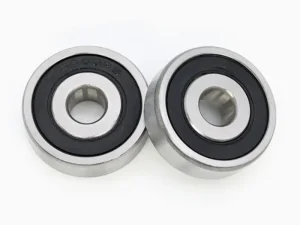
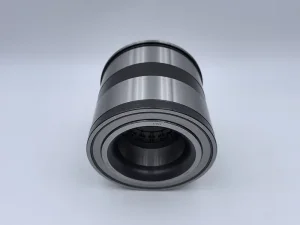
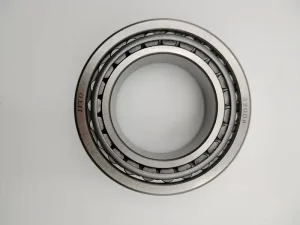
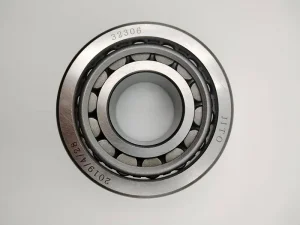
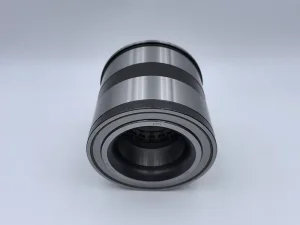
Historically, tapered roller bearings have been the backbone of heavy-duty transportation. Today, the focus has shifted towards precision metallurgy. JITO Bearing and similar top-tier manufacturers are utilizing GCr15 chrome steel to ensure high hardness and wear resistance. Information gain in this sector is driven by material science—reducing rolling resistance by 15% directly translates into better fuel economy or extended EV range.
2. China Factory 4.0: Resilience & Efficiency
The "China Factory 4.0" model is not just about automation; it is about data-driven manufacturing. Modern factories now employ IoT sensors on every stage of the production line, from raw material forging to heat treatment. This ensures that every bearing meets P0/P6/P5 standards. The global procurement shift favors factories that offer "transparency"—the ability for OEMs to track a batch from the raw steel supplier to the final quality inspection report.
3. Global Procurement: Navigating the Supply Chain
Global enterprises are moving away from purely price-based procurement. The new strategy focuses on Total Cost of Ownership (TCO). A cheap bearing that fails after 5,000 kilometers is infinitely more expensive than a premium OEM part that lasts 100,000 kilometers. Manufacturers like JITO are successfully exporting to over 30 countries by emphasizing long-life performance and zero-defect quality control.