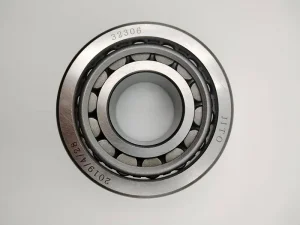
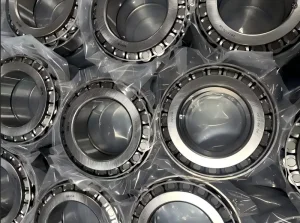
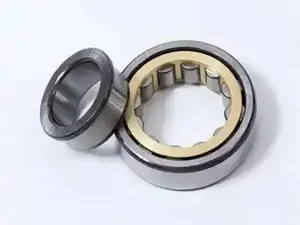
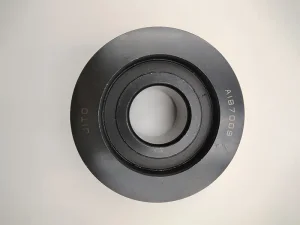
In the evolving landscape of global logistics, trailer hub bearings have shifted from commodity parts to critical assets for fleet efficiency and safety. As a premier Chinese manufacturer, we leverage Industry 4.0 standards to bridge the gap between high-volume output and precision engineering.
Our facilities integrate AI-driven quality inspection and automated manufacturing lines. By achieving P0/P6/P5 quality grades and Z1V1-Z3V3 noise control, we ensure our bearings outperform standard benchmarks. The shift to Industry 4.0 in our Chinese production bases allows for lower costs through higher efficiency, directly benefiting our global procurement partners.
Modern procurement demands "Just-in-Time" delivery and absolute reliability. Our supply chain resilience strategy involves diversified raw material sourcing and strategic logistics hubs in Liaocheng and beyond, ensuring that even under global market fluctuations, our partners receive consistent supply, mitigating the risk of downtime for heavy-duty fleets.
We utilize coordinate measuring machines, spectrometers, and bearing fatigue life testing rigs. Every unit undergoes full-process inspection—from raw material forging to final oiling and packaging.
Whether for extreme mining operations, long-haul trucking in the European Union, or high-load engineering vehicles in Africa, our bearings are customized to handle diverse environmental stressors.
As members of the China Bearing Industry Association and ISO9001/IATF 16949 certified, we uphold the highest international benchmarks in bearing manufacturing.
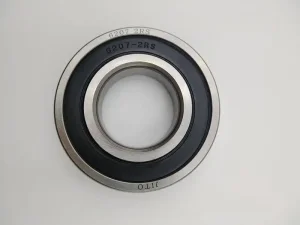
P5 tolerances offer higher precision and smoother operation compared to standard P0, significantly reducing heat buildup in high-speed long-haul trailer hubs, which in turn extends grease life and prevents premature failure.
Our "Information Gain" approach to manufacturing involves digitizing every stage of production. By using IoT-integrated monitoring, we identify potential deviations in real-time, ensuring that large-volume shipments maintain the exact specifications as the initial samples.
 Jito Bearing